DSE Media
Why DSE Media Is Sending Doughnuts and Handwritten Notes
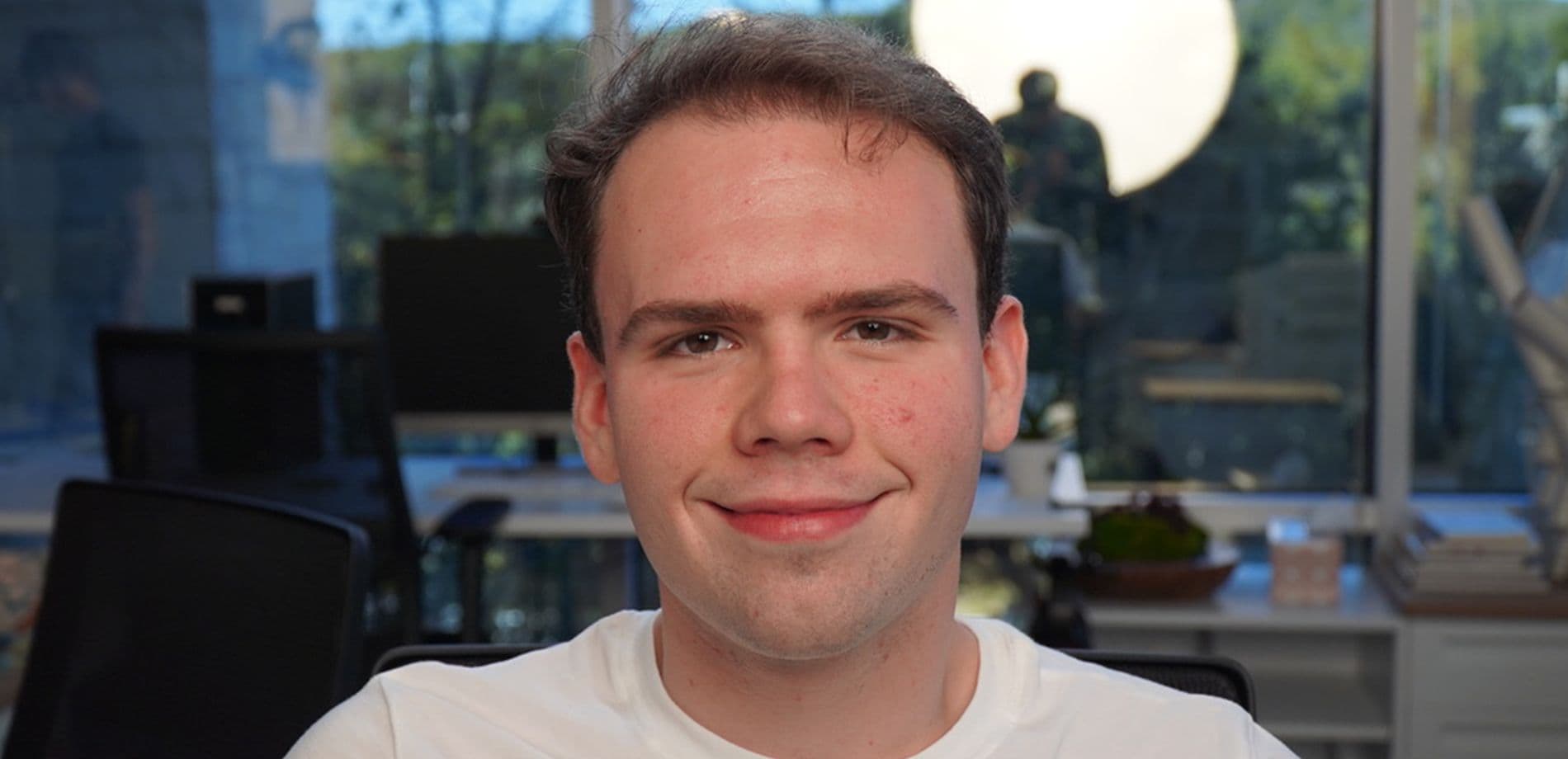
This week's Founder Friday features a founder building a social media agency for one of the most overlooked clients imaginable: city governments.
Aidan Evans co-founded DSE Media with his co-founder, Declan, to produce and manage social content for public-sector clients. That means navigating sensitive audiences, brutal comment sections, political reputations, and a PR blast radius most agencies never have to think about.
They started small, working with a city of fewer than 5,000 people, then earned their way into larger accounts including Pflugerville and former Austin Mayor Steve Adler.
But the most interesting part might be how Aidan gets in the door.
While everyone else is sending AI-generated cold emails, he's delivering handwritten notes, bringing doughnuts, showing up at offices, and getting involved in Austin's civic community.
What founders can steal from this:
- If a lead is worth $36K a year, donuts are cheap
- Find the channel where you have an asymmetric advantage instead of competing where everyone else does
- Civic involvement is an underrated way to build relationships with decision-makers
Here's what Aidan shared about building a social media agency for the public sector.
What is DSE Media, and what do you actually do?
We're a social media agency, and we specifically focus on social media for the public sector. It's an interesting niche. It wasn't what I thought I'd be when I grew up, and the jury's still out on what that will be.
We're editing videos, doing production, posting for clients, running ads. But I'm also kind of a government public affairs person who LARPs as a job. That's probably my favorite part. Really, I'm a salesperson, for better or worse. My team does most of the actual social media work. What I spend my time on is how we look publicly and what my personal brand is going to be. Most succinctly: I want to be useful to my friends, and hopefully people buy our stuff and think fondly of me as a result.
Some of my favorite leaders in politics and in networking-heavy industries routinely go out and work on issues that aren't directly correlated to what they're selling. They're creating a community presence for the firm. That makes sense in enterprise sales and government sales, because I end up with insight, like what's happening in economic development, that's genuinely useful to my customers.
How do you make content interesting for public sector clients when everything carries PR risk?
I have an anxious personality type, so I'm always afraid something will be viewed poorly. Early on, managing a city's social media for the first time, we'd put up a thumbnail and I'd immediately come up with the worst possible interpretation. "We can't say we're in explosive growth mode, someone might think there's a bomb." I was basically red teaming everything our company made, because we were speaking from the perspective of a public entity.
It helps to have a partner in Declan who isn't as afraid as I am. He'll say, "This will perform on social," while I'm saying, "We have to be sensitive to this connotation." That combination of perspectives serves us well.
Reputation matters too. We're going to screw things up, like anybody. But because we have deep relationships, we get more patience and leeway than we otherwise would. And we started small: our first city had a population under 5,000. We didn't start with Pflugerville, which has around 100,000 people. If we had, we would have screwed something up and it would have been terrible. Only over time have we earned the larger institutions with more sensitive audiences. Look at the comments on Steve Adler's accounts, every video gets 50 comments calling him the worst names you've ever seen. You have to be able to handle that to work effectively in the public sector.
What did Patrick Terry of P. Terry's teach you about scaling?
Funny story first: I got in touch with Patrick through a cold email with no subject line. Declan theorizes the missing subject line might have actually helped, because the only no-subject emails you ever get are from people you know. Nobody in their right mind sends a no-subject cold email.
What Patrick told us is that when he started P. Terry's, he was intentional about not getting ahead of his skis. When the first store did well, the next step wasn't to open 15. It was, "Let's go to the second one and slowly grow from there." That let them scale without quality dropping off. You see the opposite in startup land, where everything needs to move yesterday and scaling comes with a quality drop. That's been important to us: not moving so fast that we lose sight of the core business. It reminds me of a Ray Dalio idea: when you have two mutually exclusive options that both matter, go as slowly as you need to and take as much of both as you can.
Where do you see the public sector content opportunity going next?
Here's an example of the kind of problem I think about. I asked the city how we could use social media to communicate about homelessness. If we could use media to share the stories of people experiencing homelessness, I think it would reduce the animosity toward them, because people would start to understand their perspective. But the city's main public-facing account is going to talk about tourism and economic development. They're not going to show homeless people.
So I've been developing theories around weird public-private partnerships in content creation. Have the public sector pay for what is effectively an influencer. Not a traditional influencer, but someone high status, like a former elected official who runs a consulting company. The city pays us for production, the private citizen grows their personal brand posting on their own platform, and the city gets the marketing. Maybe we can't make content for the cities themselves, but we can lobby them on the importance of making content, and finance and operate the production for other pages. We've got one of these coming together with a city I won't name yet. That stuff is really exciting to me.
Why does your go-to-market involve donuts and handwritten letters?
I'm not good at writing cold emails. I hate them, and everyone is writing cold emails, especially with AI. It's easy to send a gajillion of them. But none of my competitors are delivering letters or pastries. If our return on a lead is $36,000 a year, I can afford to give out a lot of donuts to get business.
Two weeks ago I walked into the office of the current chair of Austin's Chamber of Commerce. She'd said I could interview her, then never answered my emails. So I drove down, walked in, and said, "I'd love to leave a note for Denise." The receptionist handed me a pad of paper. I don't think that works in a lot of places in New York.
I think of it like Julius Caesar at the Battle of Alesia. There's a great Historia Civilis video about it. Caesar wasn't the sublime strategist obsessed with formations. He had a first-principles understanding of what wins: make the enemy fight in the sun, make them hungry, make sure they don't sleep. Stack obvious, simple factors on top of each other, and once you have enough of them, roll the dice. My job is to find where I have an asymmetric advantage and attack there, because I don't want to compete. Peter Thiel has a great line about this: everyone desperately clamors to get through the small door, and while they're doing that, they miss the wide open gate right next to it.
What makes Austin different for building a company like this?
I'm from Brooklyn, and I tell this joke: in New York, you walk into a room and it's, "Are you sure you belong here?" In Austin, people ask, "How can I help you?" People in this city live in a kind of openness where naivete has not been punished. In New York, any opportunity to exploit something gets utilized. Here, a lot of stuff is open and accessible. Coming in with the attitude of a New Yorker, I kept thinking, "Don't they know this is an obvious flaw in the system?" And the answer is: yeah, but nobody exploits it.
The support I've gotten here is unbelievable. One of my mentors, Matt Cisneros, owned Backyard Ventures, which brokered podcast sponsorships for people like Piers Morgan and Ryan Holiday. I met him because his office was next to ours back when we had about $1,000 in total revenue and were pretending to have a real company from a hand-me-down couch. I wrote a note and put it through his door. He couldn't read my handwriting, but he still offered to meet. I met with him seven or eight times. He taught me how to use QuickBooks. He just sold his company.
The mayor commented on my LinkedIn post when I graduated from college. And I have a contract to do Mayor Adler's book release, which happened because I asked him to coffee, he mentioned he was releasing a book, and I said, "We could do this." He said, "I'd like that."
What's your advice for people trying to grow in Austin?
Getting engaged civically is an underrated hack for networking with the people you want to do business with. You'd be amazed at the power someone like a mayor has and how few people pay attention to them. An elected official has a sublime network among top-level people, and your average person has no idea they exist. City managers are the best example. Nobody knows what a city manager is, but your average city manager knows a ridiculous number of people and is central to any contracting or development in a city.
Second, in the age of AI, where contact is increasingly impersonal, the hack is to go in person. At the beginning, Declan thought our biggest competitive advantage was that we showed up in person. We were terrible, but we were there. Think about how many people DM you offering to edit your YouTube videos. A billion, all saying the same thing. How many have shown up on your front porch? I won our account with LeRoy and Lewis by walking up to Evan LeRoy after a panel and saying, "I'd like to help you make your YouTube videos. I don't even know how, but I'd like to." We made a deal, and I'd never met the man before.
Last thing: I underestimated how awful the process of scaling and building skills is. It's brutal. But the compounding positivity is equally underrated. Now I walk into places and it's so much easier than it would have been. And if I go bankrupt tomorrow, I have a network. I'm pretty sure I'm employable. If you can do miserable things and stay sane, keep deferring gratification, and keep the faith, that's the coolest thing you can do.
How does jujitsu shape how you think about business?
I trained at 10th Planet in South Austin, and that's where I got the idea of informational asymmetry. If you're on someone's back, they know exactly what you're going to do. You're transparent. But if you're in some weird position they're not adjusted to, where you have all the information about your opportunities and they don't, that's a very comfortable place to fight from. It's about finding one area where you're really good and the other guy isn't. It doesn't matter how long you've been playing the game.
Social media as a niche is what I've tried to do there. There's so much to get good at in the communications world, and it's not realistic to believe I'd have that many skills across the whole landscape. But you might believe I could be good at social media, because it's a small vertical.
How can the Austin community help?
Aidan and Declan want to connect with city leaders, public-sector teams, economic development groups, and organizations looking to communicate more effectively through social media.
They are especially interested in working with municipalities and civic leaders that want to make public-sector content more engaging without losing the sensitivity and judgment the work requires.
They also want to meet Austin founders, operators, and civic-minded professionals who believe getting involved locally can create stronger relationships, better opportunities, and a deeper connection to the city.
Where can people learn more?
Our website is dse.media, and I spend a lot of time on LinkedIn. For us, LinkedIn is a combination of content and outreach. I make swaths of content, people see my face everywhere, and then I use that same profile to say, "Hi, I exist." And they say, "Oh, that's pretty cool. I know you."
Connect with Aidan and Declan on LinkedIn, and follow DSE Media's work.
Want more founder stories?
Subscribe to get weekly interviews and Austin startup news.