Red Fridge Society
The Man Behind Austin's Luckiest Founder Community
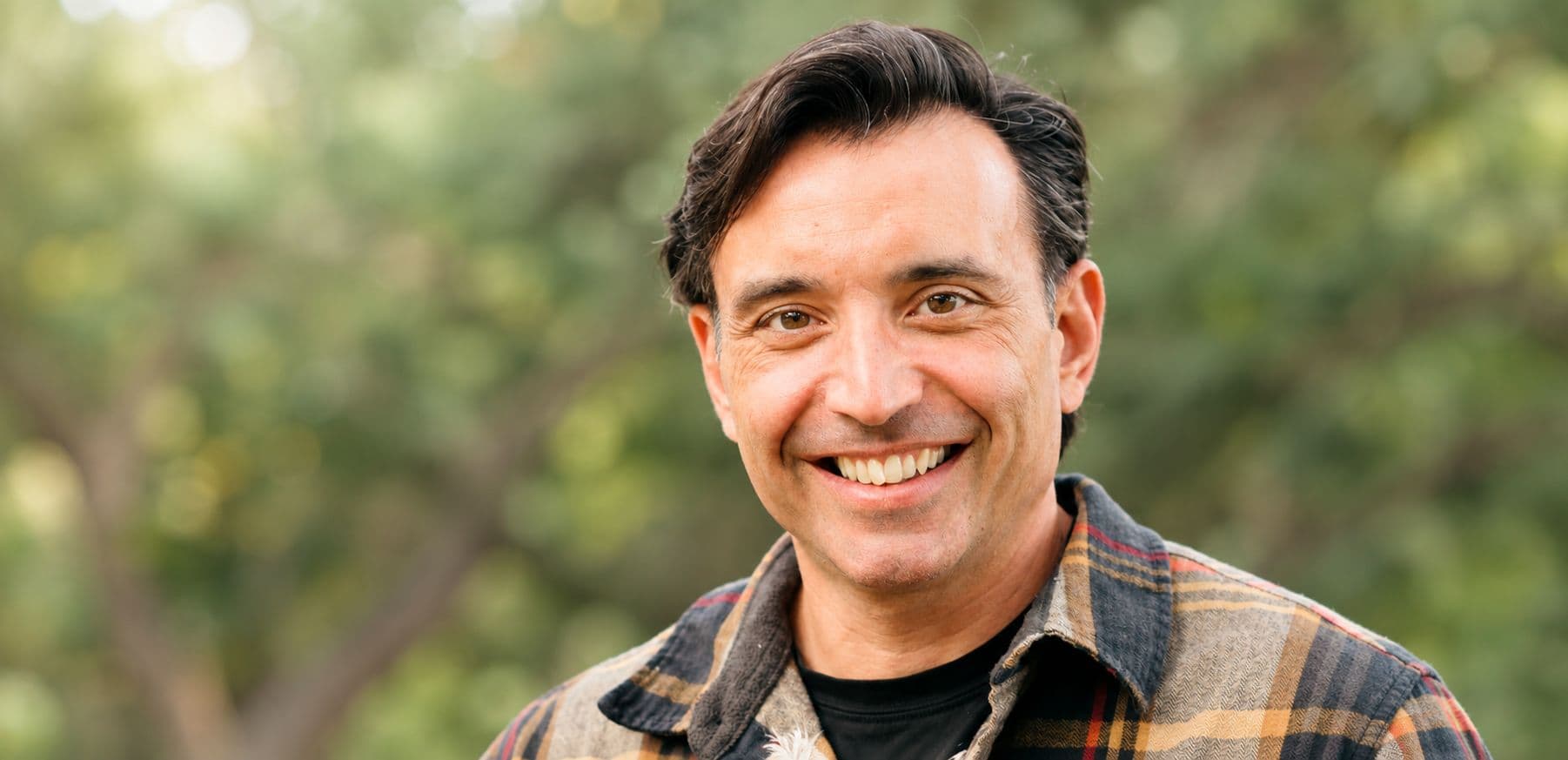
This week's Founder Friday features a founder who sold his bootstrapped software company, got his old office back, and turned it into a community built around one idea: the right room can change your company's trajectory.
After selling Square Root in 2021, Chris Taylor got back the 1920s house that had once served as the company's original office. He no longer wanted to build another big startup, but he still wanted to be surrounded by founders.
So he opened the house to them.
What started as an idea for 20 or 30 members became Red Fridge Society, a founder club with roughly 70 members and thousands of founders passing through its free events. The model is built around what Chris calls "manifesting serendipity": You can create your own luck by putting yourself in a curated room of accomplished founders, with a culture of helping each other through the journey.
What founders can steal from this:
- The hardest part of a great event is getting the right people in the room, not the content
- Create both fast serendipity through new conversations and slow serendipity through deeper relationships
- Find a community built around exactly what you do, or create the one you wish existed
Here's what Chris shared about building Red Fridge Society and manufacturing luck.
What is the Red Fridge Society, and how did it start?
I'd love to say it was a master plan, but it was opportunistic. I had an enterprise software company called Square Root that I started in '06, bootstrapped, and sold in '21. Enterprise software, automotive. Very boring, nobody cares. But what everybody knew about Square Root was our wonderful culture. Our first office, which I bought in '09, was a 1920s house between 5th and 6th Street downtown. As we grew, I started renting the houses in the neighborhood, there's a whole story about that which got us into Fortune magazine, and by the time I sold we had six 1921 houses in a row.
I only ever bought the original house. So when my acquirer unwound the office space in late '22, I got my house back, with all the furniture. I had the company culture I'd loved so much, and no company. And I had zero desire to start another one.
During my very painful earn-out, I worked out what I wanted: to own my time, to work on something truly mission driven, and no need for another big pop. A little cash flow was fine. It was about impact. So I opened the space to other founders so I could be surrounded by founders. I figured a 2,000 square foot house meant 20 or 30 members. Over the last two years, about 2,000 founders have come through for events that are always free, and we're at about 70 members, close to full. The model: roughly 100 people get 24/7 access, and their memberships fund a much larger free community of thousands of Austin entrepreneurs.
What actually makes the model work?
Culture, in two specific ways. First, I drill into people that the point of this place is the other members. There are way cheaper places to get a floating desk or take a meeting. But there aren't many places where you're constantly surrounded by your peers, and the ideas, conversations, and support you get from that are the real value. Here, it's rude not to say hello. If someone's sitting there you've never met, they're a member or a guest of a member, and that conversation is probably going to be the most valuable thing in your day. Our second value is Forward Together: we root for each other and help where we can.
Second, the model is based on trust. The space is barely staffed. Members have 24/7 access, we have $10,000 of alcohol just sitting out, and people are respectful because it's small. If this were six times the size with hundreds or thousands of members, you couldn't have this level of trust, where I know everyone personally and everyone is accountable to each other. Put your stuff in the dishwasher. Leave it how you found it. I used to joke: if you want to overpay for a floating desk and take out the trash occasionally, you're going to love this place.
And to be clear: we are not a co-working space. Depending on who I'm talking to, I call us a founder club or a social club. We happen to have a lot of co-working benefits. We are not a co-working space.
What's your philosophy on running great events?
People overthink events. The hard part is getting the room right, the people in it. I'd much rather have a smaller event full of people who are really founders, really in the journey, so the conversations and collisions before the content are high quality. The brand I'm going for is, "My gosh, I always meet wonderful people at a Red Fridge event." I spend more time on that than on the content. I've been in Austin 33 years, so getting speakers is the easy part. We had former Mayor Adler last night, Brett Hurt last week, Whurley earlier this month. What I hear again and again is, "The talk was amazing, but I had this conversation that changed the trajectory of my company." The real value is that.
I look at every single person who RSVPs. I wrote a little app that tracks who they are and how many times they've been, so I can spread the love around. The events are broad on purpose: a wine series, a coffee series, a non-alcoholic bar series, a wellness series with the sauna and cold plunge, and different times of day so founders with kids who can't do happy hours get breakfast and lunch slots. It goes back to our first value, Manifest Serendipity. You can create your own luck, and you get more serendipity with more diverse points of view.
Now that the brand has grown, most events get two or three times more RSVPs than spots. The curation is time consuming, but it creates fantastic rooms. One thing I'll hammer: don't no-show. These are waitlisted events, and we track it. You won't be coming to one of mine anytime soon if you no-show. But the appetite is almost bottomless. I run three to five events a week, and last week 140 founders came through.
What has surprised you building this?
Everything, since I didn't set out with a plan. The number of members the small space could support: I thought 30, and it's closer to 100. The sheer appetite for the content: it feels like I could run something every day and still be oversubscribed. And interestingly, my members come to very little of it. They're busy. Members fill maybe 10 to 20% of event spots, and the rest goes to the wider Austin community.
My attitude toward anyone who walks through the front door, whether a member, a speaker, or a fridge friend, is: how can I help this person, and who do I know that would be mutually beneficial for them to meet? I never do cold intros. I always ask first. But I deeply know what my members are doing, so when a health tech founder comes through, I know exactly which member to connect them with. Members get that in spades. The value of the space is the serendipity we create through relationships, and my job is to facilitate it.
What are 'fast' and 'slow' serendipity?
There are two types of serendipity any community can have, and I try to facilitate both. Fast serendipity is the kind everybody thinks about: you sit down next to somebody at an event, strike up a conversation, and some unexpected value comes out of it. I see that every day.
Slow serendipity is what happens when people actually know each other, the way I know my members and they know each other. People start passively looking out for you. If I meet a health tech founder, I'll introduce them to the health tech members. When a community has that culture, the serendipity extends beyond whatever room you're in at any given time. That's where the real value happens. And if you step back, that's the value of community: it creates opportunities for everyone in it, but it provides a disproportionate amount of value to the person who leads it. You become the gravity well for the organization.
Is the Austin generosity thing real, or just a nice story?
I do think it's real, and the way to know is the recent transplants, especially from the coasts, who are dumbfounded by how friendly everyone is. The idea that you come into a conversation through an introduction and leave with two more introductions, that's the Austin way. My read is that in a lot of places, relationships are currency. Introductions are chips you don't want to waste. Here it's, "Oh, I think they'd love to meet you."
Something I've said for 30 years in Austin, and I think it's still true: people here are ambitious but balanced. Everybody's saying, "We're going to change the world," in tech, art, health tech, theater. "But do we have to do it tonight? Because tonight there's a really good band." That balance leaves room for not being cutthroat. Whole person, whole city. The Red Fridge is just an embodiment of that.
Why do you think communities matter more right now?
Two reasons. First, nobody has a second space anymore. People call the Red Fridge a wonderful third space, and I point out that home and work collapsed into one for a lot of people. It's very hard to create serendipity sitting alone in your house. The Zoom meeting is not set up for serendipity. When you engage with a community concentrated around what you do, it creates room for luck and connection. People need it personally, and they've recognized that amazing things happen when you leave the house.
Second, communities are one of the few things that are hard to disrupt with AI. For the startups I mentor, it's one of the few moats left. If you build a marketplace or community where your users make your product and data better, that's something nobody can recreate in a weekend. Communities are great businesses on top of everything else.
What's your advice for founders and operators early in their careers?
Find a community around what you do, as specific as you can get. And if you can't find one, start it. Zach Solomon is my favorite example. He started ATX Writing Club by getting writers together in a coffee shop once a week. Fast forward: he has a physical space with members, all creative writers, and he quit his day job running community for a tech company to run his own. It's a great career path, and he's very influential within that circle.
I give this advice constantly. Last night a university student on former Mayor Adler's film crew was telling me about her interests, and I said, "Have you found a media and camera club yet? You should start one. It'll have value in ways you can't imagine right now."
Why does this matter to you personally?
The Red Fridge is for-profit. I'm not completely altruistic. But I reinvest a lot into the larger community, and the joy of it is the impact. Square Root had about 60 people at our peak, and we launched a lot of careers, which I loved. What I'm doing now is way more impactful for Austin, because I touch so many more people. I genuinely believe entrepreneurship is one of the ways society gets out of a lot of its problems, and it's one of the largest levers I personally can pull. My little impact on the Austin scene will be helping 1,000 entrepreneurs over the next couple of years.
How can the Austin community help?
Chris wants to connect with Austin founders looking for a strong community, better relationships, and more serendipity around what they're building.
He's especially interested in meeting founders who value showing up in person, helping others, and contributing to the kind of room they want to be part of.
Where can people learn more?
The website is fridgeatx.com, with the event calendar. Most events are limited to founders, but at least once a quarter we invite the larger entrepreneurial ecosystem in. Chris is on LinkedIn, which is about the only social platform he uses. You can also browse upcoming Red Fridge Society events on Luma, and follow The Red Fridge Society on LinkedIn and Instagram.
Want more founder stories?
Subscribe to get weekly interviews and Austin startup news.