Fit Local
He's Building an Austin Local Fitness App by Knocking on Gym Doors
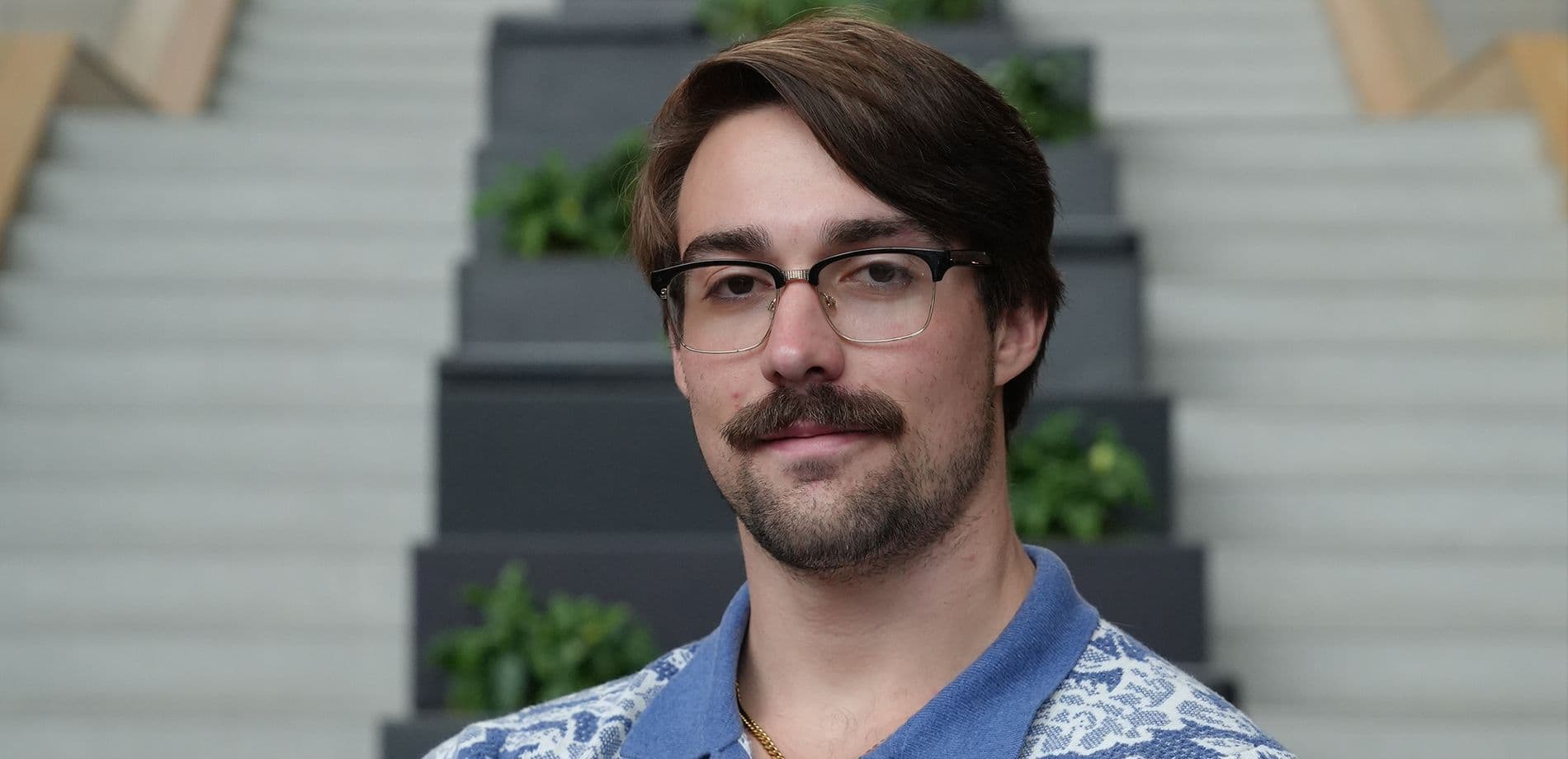
This week's Founder Friday features a former gym owner building a two-sided fitness marketplace with one of the least scalable growth strategies imaginable: showing up in person, one gym at a time.
Conley Miller started personal training at 19 and opened his first gym at 21. What stuck with him was how difficult, and expensive it was to consistently get new clients through the door. After spending thousands on marketing agencies and watching digital acquisition get more competitive, he decided to build the platform he wished he had as a gym owner.
The result is Fit Local, a marketplace that helps people find personal trainers based on the person, not just the gym.
But instead of trying to solve the marketplace chicken-and-egg problem with ads, Conley started knocking on gym doors. He launched a trainer interview series, showed up in person, told their stories, and used those relationships to build the supply side of the marketplace before going after consumers.
What founders can steal from this:
- Build the supply side of a marketplace before trying to manufacture demand
- Lead with something valuable before asking people to join your platform
- Combine offline relationships with online distribution instead of choosing one or the other
Here's what Conley shared about building Fit Local one gym door at a time.
What is Fit Local, and who is it for?
I'm the founder of Fit Local, an app we've launched on the App Store. It's a B2C SaaS platform for clients looking for trainers in their local area. There are a lot of platforms that do online coaching or help you find a gym, but there's a gap I found from my own experience. I started personal training at 19 and opened my first gym at 21. I realized it was really expensive and hard to get people in my door. I worked with a lot of marketing agencies over the years, and I wanted something simpler than running a $3,000-plus Facebook campaign.
Fit Local makes it easier to find your trainer and what gym they're at, instead of scrolling through every gym's website trying to figure out rates. You search by person instead of by gym: "This person matches my vibe, this person matches the training methodology I'm going for." Because in my opinion, that's what matters most. It's not where you're training, it's who you're training with. It works kind of like Tinder. It's really fun.
What problems are you actually trying to solve?
Two. On the consumer side, a huge share of the country has a chronic illness, and most of those people got there through lifestyle choices and habits. The only thing I've seen in my career actually change that is accountability and discipline. A lot of people aren't educated on fitness or on just moving properly, so they don't start, or don't know where to start. Many people can't hold themselves accountable, so they want someone else to, and there's nothing wrong with that. Only a small fraction of the population has a gym membership, and a fraction of those actually use it. As a society, we never properly learned the value of health.
The other side is the trainers. There are a lot of them, but they don't have an effective platform to market themselves. They all do it on social media, and I'm not against it, but social media is a billboard, not a point of sale. People post their lifts thinking clients will come. That's not how it works anymore.
What is "digital fatigue," and how is it hitting gyms?
I wrote about this in a column called Digital Fatigue after interviewing gym owners and trainers. First they'd just post on social and people would come in the door. Then that stopped working, so they threw up ads. Now ad costs have nearly quadrupled. What cost $5 a lead two years ago is now $20 to $30 per lead. And everyone is running the same offer: "Get your first free class." Everyone's seen it, so it isn't special anymore.
On social, trainers are competing with dogs, puppies, and entertainment. It's a media platform, not a place to shop for trainers. Websites rely on Google, and AI has changed search. Everyone is searching through AI now, and unless you're constantly competing for that space, your Instagram or website isn't coming up. I wanted to give trainers a safe haven: consistent, reliable, affordable, where they can build up their clientele.
How did you solve the chicken-and-egg problem of a marketplace?
No matter what you read, you need the business side first. And if you don't have a brand, a platform, or a lot of money, you have to do the legwork. So I launched a series called Meet the Trainer. I went around and, full transparency, used it almost like appointment setting. "Hey, want an interview?" "Yeah, that's cool." Everyone wants to be heard, and I love the trainers' stories. It got me in the door. Then I'd show them what I'm building and why, and they'd go, "Wow, this is really cool."
I did a lot of door-knocking, and I probably will for a long time. It's one of the funnest parts of Fit Local. When I cold called, they didn't trust me, and I get it. These businesses get called 24/7 by marketing agencies. I stuck out by saying, "I'd love to come interview you, get your story, your culture, and show people what they get when they walk in your door."
Doing it that way created an online presence and an offline presence. People got to know me and my mission. It's not just some ad on Instagram. This guy is showing up with his team trying to make a difference. It spread organically. "Did you hear about this kid doing this?" I read an article recently that brands are built in person now, not online, because of digital fatigue. People are dopamine-fried from what they see online. You stick out by showing up.
You interview trainers without pitching them. Why does that work?
The irony is I don't even sell it. I say, "This is what it's for. Use it or not." At the end of the day, I remember what it was like to be a gym owner. I never had an opportunity like that walk through my door, and it was really hard. So I tell them, "I know it's hard out here. All you want to do is make people healthier, and marketing is expensive and difficult. I'm on your side. I want you to win. Take the platform or not, I'm still going to shout you out."
Why wouldn't I? If a gym goes out of business, there are fewer healthy people in the world. If it stays in business, there are more confident, healthier people in society. I always think of it as something bigger than the app. My goal is to get as many people through gym doors as possible, because the more people that are healthier, the better off we all are.
Why did you launch in Austin?
Funny enough, I tried a dual launch between Austin and San Antonio, because my gym was originally down in San Antonio. But San Antonio was resistant. I did a lot of outreach, made content, did interviews there, but I think they needed to see proof first. Austin is a lot more open-minded. It's a place where people come to do business. A friend of mine says, "People come to Austin to hustle." And it's arguably the healthiest city in the country, top two at worst. Great influencer market, great fitness community.
Austin didn't shun me or refuse to give me the time of day, and I appreciate the city for that. It's also a consciously healthy city. People here are always looking to improve their craft, and as consumers they want to take their health to the next level. There are over 2,600 trainers in Austin alone.
What are the biggest lessons you've learned building this?
It's okay to be bad. When I started developing Fit Local, I knew nothing about the online space, digital marketing, or sales. I was the personal trainer who just wanted a local gym. But I was very bad at everything I started, and my mentality was, "I can figure it out. How hard can it be? That guy's flying a plane. Why can't I?" You're your own worst critic, but you can never get better unless you start. The process is very humbling. But it's okay to be bad, because then you get up next week, learn from your mistakes, and try again.
The other hard lesson: not everyone is a good fit for your business. Sometimes you want to bring people with you who aren't aligned. That could be a skill gap, a leadership gap, or someone selling themselves as more than they know. Learning to let people go is hard, especially when they're friends. "I have a mission here. This is my dream, not yours, and I get that. But I need you to be proactive, not reactive." I still wish everyone who has worked with me the best, and I still consider them friends. I believe a high tide raises all ships and iron sharpens iron. Even if someone's done me dirty, I wish them the best. Karma is real.
What's your advice for people building businesses in Austin?
Take time to learn, and I don't just mean opening a book on sales philosophies. Stay up to date: what's coming out, what's being built in your area, the new advancements in AI. All of it is affecting your business, and if you don't have an idea of what's going on, it will bite you down the road. You can have all your SOPs and ducks in a row and still be stuck, and if you're not updating with what's rolling out, two or three years later you're going bankrupt because you didn't change.
And get out of the office. Go to events. I'm always interested in what people are talking about, what's going on in the market, what the new thing is. What someone's working on could be a game changer for you.
People glamorize "it's not what you know, it's who you know." Yeah, but it also helps when you know something. And there's a quote I believe in: "an empire was never built behind a screen." It's a mix of new and old. I'm optimizing hard for GEO so Fit Local comes up when you search for a personal trainer through AI, but I still need to be out making content, shaking hands and kissing babies. Each one alone is strong. Together, you're knocking it out of the park.
What's next for Fit Local?
We're getting our ducks in a row and launching the client campaign in Austin, so we'll see how the market reacts. We put a lot of effort into those ads, and I'm hoping a lot of people get good help from them. If everything goes well, we'll hop over to Houston and recreate what we created here.
So if you're a trainer or gym owner in Austin and you haven't been featured on Fit Local yet, take the opportunity in the next couple of weeks. I'm not leaving Austin. This is my baby, my home, and my headquarters. But my time may be placed elsewhere soon, so reach out before we run to the next city.
How can the Austin community help?
Conley wants to connect with Austin personal trainers and gym owners who want more exposure and a better way to get discovered by local clients.
He is especially looking to feature more trainers through Fit Local's interview series as the platform continues building out its Austin network before expanding into other Texas markets.
He also wants to meet founders, operators, and fitness professionals interested in the future of local discovery, community-driven growth, and healthier alternatives to increasingly expensive digital advertising.
Where can people learn more?
Learn more at fit-local.com, follow Fit Local on Instagram and YouTube, and download the app on the App Store or Google Play.
Want more founder stories?
Subscribe to get weekly interviews and Austin startup news.