Stray Vista Studios
How Nate Strayer Built Austin's Largest LED Volume Stage
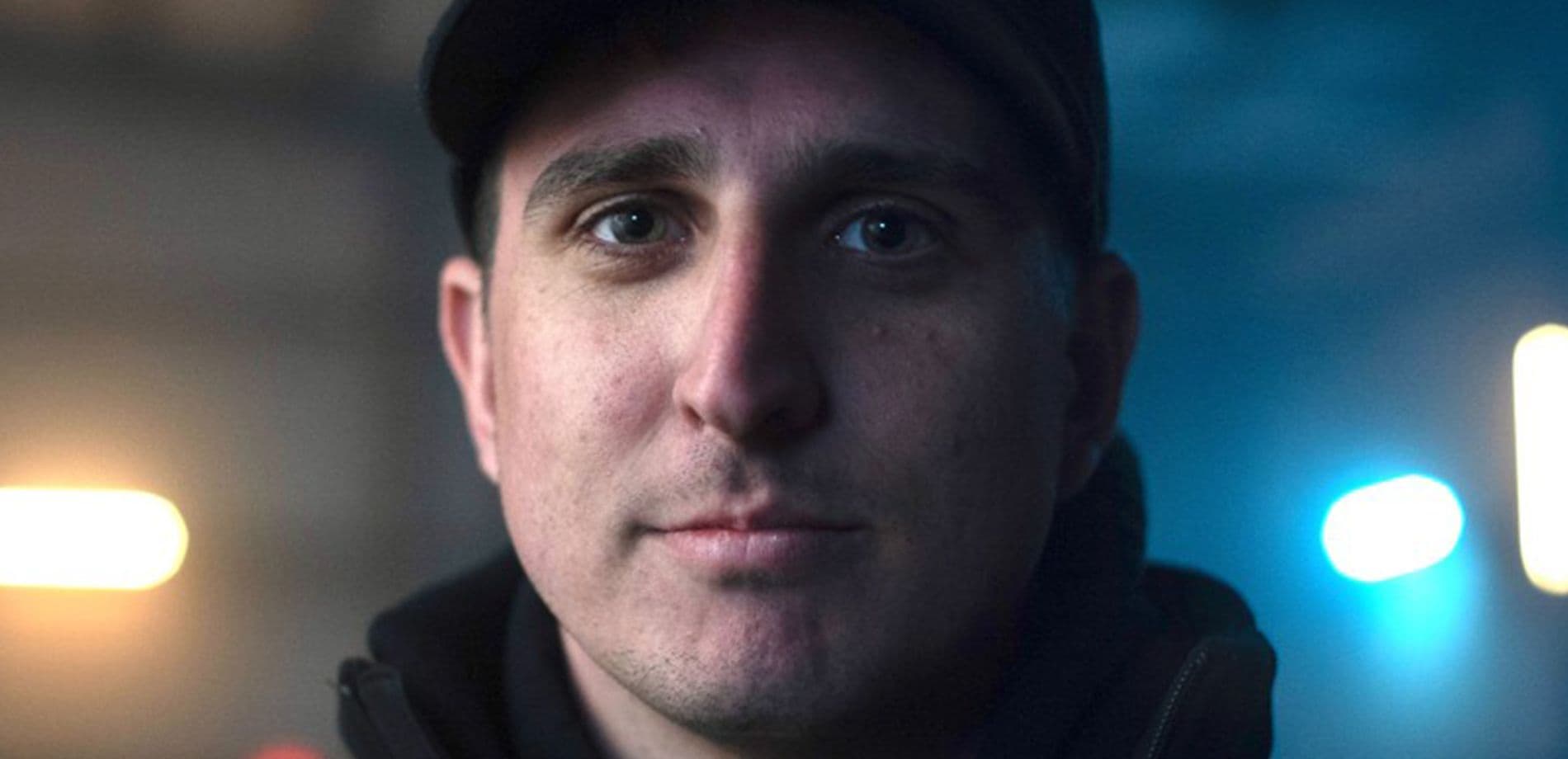
This week's Founder Friday is about a COVID pivot that turned into Austin's largest LED volume stage, and saying yes to Google before the studio even had working bathrooms.
Nate Strayer is the founder of Stray Vista Studios, a multimillion-dollar production facility built around an 80-foot curved LED wall inside a 10,000-square-foot building.
What started as a studio-space idea snowballed through loans, investor raises, and market research into the city's largest LED volume stage.
Nate didn't wait until everything was polished. He found a missing piece in Austin's media infrastructure, built before the market looked obvious, and used early momentum to prove the demand was real.
What founders can steal from this:
- Say yes before the bathrooms work
- Treat competition like a rising tide
- Focus on wedges of the market others aren't chasing
Here's what Nate shared about LED volume stages, virtual production, the Matthew McConaughey podcast set, and building in Austin's film scene...
What is Stray Vista Studios, and how did it come to be?
Stray Vista Studios is the largest LED volume stage in Austin. It came to be around 2021, shortly after The Mandalorian came out and kind of revolutionized this way of filming using LED screens.
I was living in LA going into 2020. When COVID hit, I decided that if I was going to be locked down in a tiny apartment I was paying three grand a month for, basically a closet, I'd rather live somewhere else. So I went back to Michigan, where I grew up. We thought it was going to be a two-week lockdown, but it ended up being months.
During those two weeks, my girlfriend at the time, who was a producer, and I decided to just shoot something. We had all this time, and we were never going to have that much time again. We wrote a little short film. Two weeks turned into three. We kept writing scenes onto it, editing each night, going back to the writer's room, writing something, shooting the next day. We did that for 45 days and came out with a full feature film. We ended up selling it to Tubi. It's called Outlier. Definitely a COVID film made by two people, but it did well enough that the people I'd raised money from were asking what I wanted to do next.
I still had my apartment in LA, but I realized I didn't have to be there. The biggest thing I'd done up to that point was done outside of LA. I looked at Austin, Nashville, and Miami, and chose Austin. At the time I was writing full time. One of the people I was writing scripts for had a company buying an old firehouse, and he said, "Have you ever considered doing a studio? In LA you can rent these big spaces and get a lot of money from them." That opened my mind to it.
I started doing market research right around the time The Mandalorian was popularizing this new way of filming with big LED screens. I went back to the people I'd raised money from for the feature film and asked if they'd be interested in a studio. It started without LED volume, just a studio space, and I was able to raise a little. Then I got a call from another guy. Long story short, I snowballed this idea between loans and raises into a multimillion dollar LED screen studio, without really knowing what I was doing.
One week before we even finished construction, we got a call from Google. "We need a big LED screen. We hear you have one. Are you open yet?" I said, "We don't have AC and our bathrooms don't work, but you can come rent the space and we'll turn on the wall for you." That was our first client. We've been booked relatively to capacity since then. We're also now a production company doing original work, commercials, TV, and film.
What's the actual scale of the LED screen, and what can you do with it?
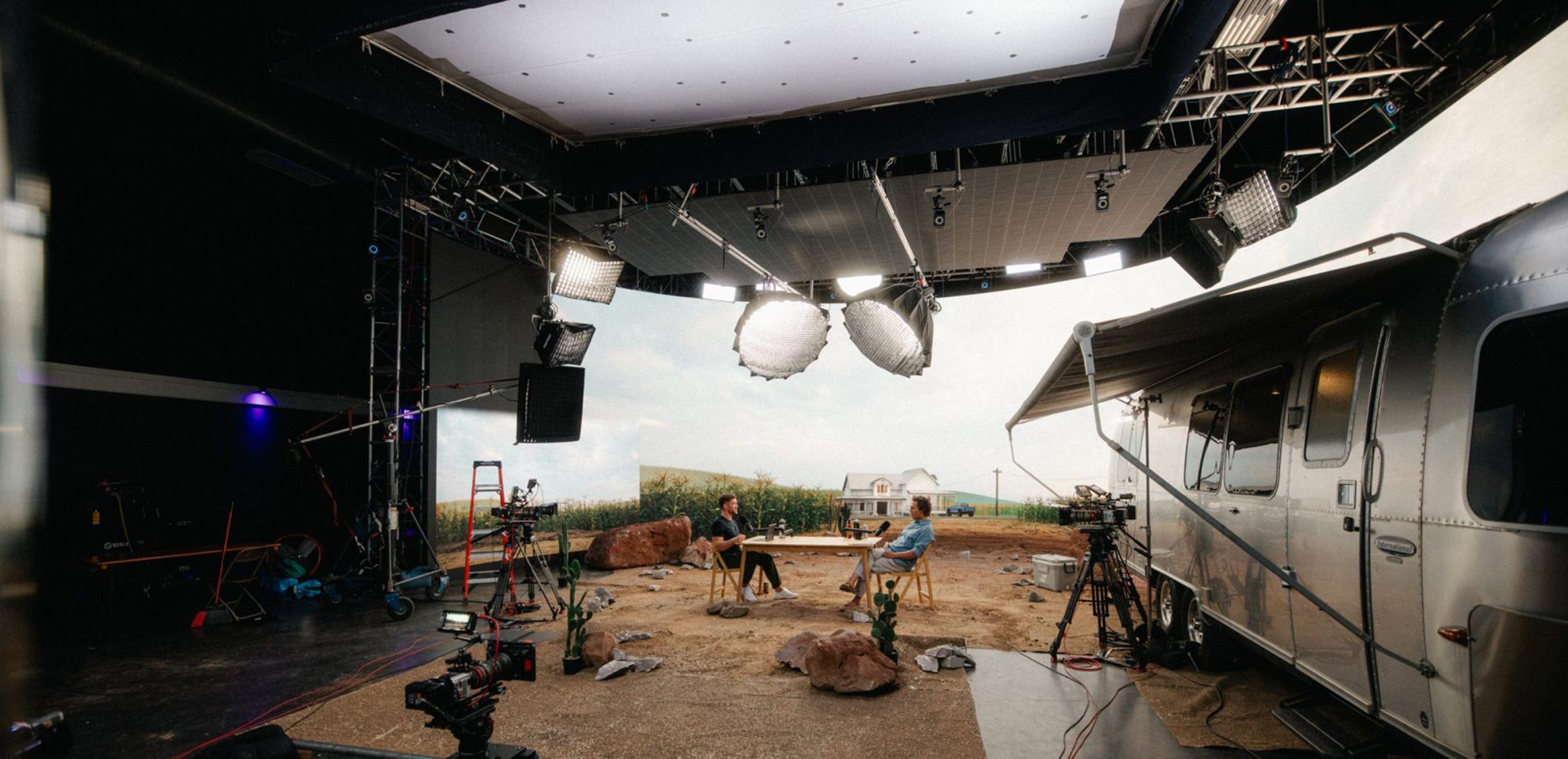
Our LED screen is what I'd call medium sized. There's one in Australia that's the biggest in the world. Ours is about 80 feet long and 18 feet high. It's curved on a 40-foot diameter, so picture a semicircle 40 feet across, but stretched out it would be 80 feet long. It's a massive TV. It's all six-inch by six-inch panels that you put into frames and build up like Legos. The building it sits in is 10,000 square feet.
The best way to explain what it does is still The Mandalorian. In that show, the main character goes to different planets and spaceships. Because he's basically wearing a mirror, a chrome suit, green screen wouldn't work because you'd see all the reflections of green. Instead, they used video game engines to display these worlds in real time, so the reflections are real and you don't have to do a lot of editing in post.
You can put any world you want behind the screen, use real props and practical art in front of it, and the world extends infinitely. Instead of traveling to Mount Everest in the morning and doing a company move to Nepal the next day, or flying halfway across the world to a desert, you can flip the set in 20 minutes and be in both places the same day. You can go anywhere in the world inside a studio.
What's an example of a project that really showed what the studio can do?
One of the people who reached out was Chris Williamson for the Modern Wisdom Podcast. Podcasting in the space wasn't really on my mind until he did. He had six guests lined up and said, "I want to get these all done in one day, and I want it to be incredible. Something nobody's ever done before." He's always been interested in a very cinematic podcast. He wasn't satisfied with just the audio being good, he wanted the video to be really good too.
The idea we brainstormed together was to put each guest in unique environments that spoke to them. The pinnacle of that was Matthew McConaughey. My team, specifically our Unreal Engine artist Zach, rebuilt the cornfield and farmhouse from Interstellar. At the beginning, we had a desert set up. Matthew walked in, they started talking, and it looked like they were in a desert.
The first thing he said was, "Do you do this production value for everybody?" He'd been to the studio twice before for other shoots, but for a podcast it kind of shocked him. About 10 seconds in, Chris said, "We wanted to surprise you with something special," and we pulled up the Interstellar set. Matthew started pointing at the screen as if it was the actual location. He said, "This is the road I was driving up on, and this corn was all planted by production." He started telling stories about the location as if they were really there, because Zach built it with such accuracy.
Why Austin, and how has it shaped what you've built?
I didn't move here with the intention of building Stray Vista. Walt Disney has always been my North Star career-wise, so I knew at some point I wanted to own a production company and studios, but I thought that was 10 or 20 years away.
I moved to Austin because I fell in love with the live music. Nashville was my other choice, but there isn't much water there, and Austin has Lake Austin, Lake Travis, and Town Lake. I fell in love with the city itself. It wasn't a business decision. But I think God was looking out for me, because when I did the market research later, the studio was definitely missing from this market. We're still the only volume of our size that can handle the projects we're handling in the city. It wasn't a business decision, but it ended up being a great business decision.
There was enough commercial work already to justify building what I built, and we've worked hard to bring in more narrative work too. I wrote and got to second unit direct with Nic Pizzolatto on the True to Texas campaign, basically a short film riffing on True Detective, since Nic wrote and directed True Detective. We had Matthew McConaughey, Woody Harrelson, Dennis Quaid, Billy Bob Thornton, and Renee Zellweger advocate for more film incentives in Texas. A film incentive is essentially the government giving some money back because of the economic impact of shooting a film in your state.
That campaign, along with a bunch of groups that lobby and advocate for these things, helped get a $1.5 billion film incentive bill passed. So "why Austin now" is a different question than "why Austin when I moved here." Now it's a very competitive film scene, and with commercials, film, and TV, there's definitely enough work.
Why is Austin uniquely positioned for what's happening in media right now?
Austin has been a boom town for probably the last six years. Since COVID, a lot of people started moving here, and it really hasn't slowed down. The right people are moving here too. Very creative and business-minded people. Traditional media and film were lagging when a lot of creators had already started moving here earlier, but it's catching up now, which means more opportunity and a lot of inertia, especially as more businesses support this type of work.
What people, communities, or organizations have been most supportive for building here?
So many. When I first got here, I worked with Mindy and Heather, who own a consulting company called Shine Co. They plugged me into the Austin film scene the first two or three months I was here. "What events should I be at? There's this happening on this day, that happening on that day." I'd show up to all of them and try to meet as many people as possible.
It started with them, and then you start meeting other people. The film community here, other studio owners, there's a lot of big talent. There are big names that live in Austin and are actually plugged into the Austin film scene, not just here for tax purposes while working in LA. The film community here is very important to the success of any of our endeavors.
How can someone get more involved in the Austin film community?
It depends on your goal. If you're a crew member, get on set however you can. Find a set that's working and, if you have to, be a PA and meet people that way. If you're more of a director or producer, just start making stuff. We know when stuff is being made, because word gets around. If it's quality work and you're working hard, people notice.
Show up to the events. We have South by Southwest. We have Austin Film Festival. The AFS Cinema is a good place to meet people. There are lots of good opportunities. But the main thing is to plug yourself in with the work. Start working.
What advice do you have for people trying to build in Austin?
Specifically here, don't hold your cards too close to your chest. Austin rewards people who are open. Yes, there's competition, but view it more as a rising tide that lifts all ships. If you help your competitor, that's likely going to bring more volume of work in, which you can benefit from too.
Don't view anybody as a competitor, especially in entertainment. We're all on the same team, fighting for an industry to grow here. At some point, unlike LA, an industry gets so saturated that there's true competition, where either you survive or I do. But here it's more, if I help you, it's going to bring more work for both of us.
Where can people learn more about Stray Vista or book with you?
To book, give us a call. My studio director is always down to chat through any project. We're at strayvista.com and on Instagram.
I recently started a YouTube series under my name, Nate Strayer, where we did some behind-the-scenes of the Matthew McConaughey podcast. We also went and hung out with Zachary Levi on his ranch and talked about AI and how he's building something here in Austin to protect artists from AI.
Just look out for our work. We're developing some pretty large projects behind the scenes that aren't service jobs, they're more Stray Vista pushing out into the world. When those come out, if you're following us, we'll point you in the right direction.
How can the Austin community help?
Nate wants to meet more people building in Austin's film, media, and creative space. That includes founders, brands, agencies, creators, producers, directors, and local businesses that want to make higher-quality video without flying a team to Los Angeles or New York.
Stray Vista can help with:
- Commercials and brand campaigns
- Cinematic podcasts
- Founder and operator video content
- Virtual production
- Film and TV projects
- Original storytelling
- Productions that need an LED volume stage
But Nate is also interested in the broader ecosystem. He believes Austin's media scene grows faster when studios, producers, crew members, creators, and local businesses treat each other less like competitors and more like infrastructure for the same market.
Where can people learn more?
Visit strayvista.com, follow Stray Vista on Instagram, subscribe to Nate's YouTube channel, and connect with Nate on LinkedIn.
Want more founder stories?
Subscribe to get weekly interviews and Austin startup news.