eBusiness Pros
This Austin Agency Doubled by Doing Less
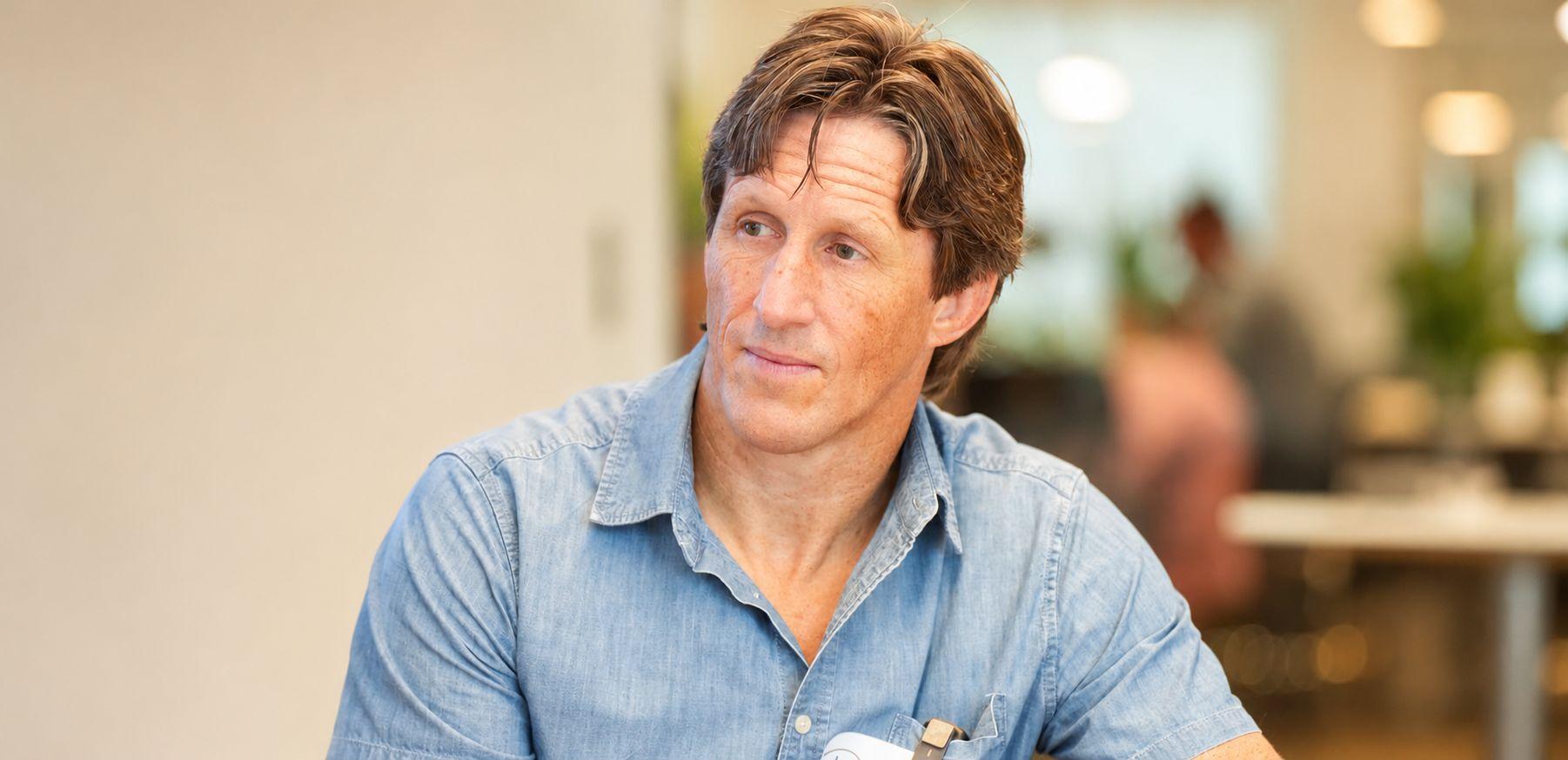
This week's Founder Friday features an entrepreneur who believes one of the biggest mistakes in email marketing is relying on discounts instead of giving customers a reason to care.
Patrick Pitman has spent nearly 30 years in eCommerce, including 15 in Austin. He runs eBusiness Pros, an email and retention marketing agency for direct-to-consumer Shopify brands, alongside his children, two of whom work full-time in the business.
The business doubled after narrowing its focus to email and SMS marketing.
Today, Patrick is championing a different approach to marketing: the best brands don't just optimize for conversions. They tell stories, earn trust, and build relationships that keep customers coming back.
What founders can steal from this:
- Sometimes the fastest way to grow is to do fewer things exceptionally well
- Build a brand book before asking AI to write your marketing
- Surround yourself with founders and mentors who can offer perspectives AI can't
Here's what Patrick shared about focusing his agency, marketing with respect, and using AI without producing slop.
What is eBusiness Pros, and how did it start?
My background is in ecommerce, and everything I work on supports a direct-to-consumer sales channel for businesses trying to sell their products online. I've been working in that capacity for about 30 years, and about half of that time has been in Austin. I came to Austin 15 years ago because I knew it would be a place that would have a future in business and tech, and also a place for my children to launch into the world.
What I'm building today is in collaboration with my children. I have four, and two of them work full-time in the business. The other two are in a college transitional phase, so they're in and out in a summer intern role. I'm essentially creating a services agency in Austin with the support of my two oldest, Gabrielle and Abigail.
The way my oldest daughter came to join was she had a career in music. I thought her future as a singer-songwriter was part of what made Austin appealing. But it's difficult to do that when you're working at a pizza restaurant at night. You need to be free at night to go do your music thing.
So I told her she needed a day job, and I needed a solution to a problem. The problem was Mailchimp, a popular email marketing tool that wasn't good enough for our ecommerce clientele or for how Shopify was working. I said there's a software called Klaviyo, and asked if she'd take a look and see if that was the answer for us. That was 10 years ago. She put her head down, and six, seven years later, Klaviyo picked her as one of the top email marketers in the world and said they wanted her to help steer the Klaviyo platform.
Why did niching down to email change everything?
In that moment, with the focus she had on the email marketing offering, we decided to narrow our niche down to just retention email marketing. I had been doing all kinds of ecommerce development, the broader sales channel, bringing manufacturing companies into a direct-to-consumer relationship and all the ways that needs to be done. Customer service, the back end, the point of sale, all these things. Narrowing our focus to just email and retention made a transformative difference.
Over about two or three years, we doubled in size. We accomplished this by collapsing what we were offering into a super clear proposition: email and SMS (text message marketing) for a direct-to-consumer Shopify brand. It became a very easy story to tell other people. Our operational excellence improved. Every one of our activities became reinforcing of the next.
The big encouragement for anyone in a founding role is to really listen for those signals where you can niche down, do less, and do it much better. Why did it take me so long to appreciate the power of niching down?
Why email, and where should a brand start?
Email is something you can own: the owned channel of your relationship with your customers. There's so much long-term value in what that list can give you. I'm all about building assets for entrepreneurs that they can own and not just rent from Meta.
The first start is to think about how you hold attention without offering a discount. The work we most enjoy is for those enthusiast audiences. You might even call them a cult following. If you don't yet have what you consider a cult following, I would think deeply about how you can find what resonates with people to develop that kind of enthusiasm in your audience. Because the worst thing, I think, on the email side is selling out into the coupon code. "Come back and buy again. It's cheaper."
What we like to lean into is the story behind the founder, the story behind the product, but also the social proof that comes from enthusiastic customers. Email is just one of the ways you can deliver that message. But it's more important to say there is a story and a message that people can feel enthusiastic about.
What is attuned marketing, and how is it different from optimizing?
AI is changing how brands value services, because anyone can ask Claude to help build a marketing plan. So 2026 has been a year of asking where we can most add value, and what judgment and experience we can bring that differentiates us.
Part of the answer is a clearer point of view about what marketing ought to feel like for the shopper. We call our philosophy attuned marketing. It expects a higher level of respect for the consumer, rather than treating you as someone I can push buttons and pull triggers on. So much marketing language is "we're going to drive this" or "force this to happen." Attunement is more like putting something on the table, you reach for it, and then I set something else a little farther away. I'm almost like inviting you in, holding your curiosity, telling a story, drawing on values you connect with. The risk with optimization is that it can be taken to the point where you dial it in, dial it in, and it gets more and more base in its emotional triggers.
A lot of our work over the years has been with luxury businesses, and some of those brands have a long-term perspective. Not every brand sells something built to be passed down. Even so, we have a brand we've worked with for many years that expected to sell to the children of its customers, a 25- or 27-year kind of relationship. I've worked with that brand since 2001, and we've seen it happen: the next generation comes up and starts to buy. When you have that long-term point of view, it changes the pace at which you push offers at people.
How do you use AI without it sounding like slop?
So much of the AI critique people have comes from not giving it enough context, enough briefing, enough brand guidance to generate content of value. That begs the question of whether you even have a larger brand story, with deeper examples you can feed into an AI model so your marketing doesn't just sound like slop.
That's the deeper work for a brand: understanding why you started the company in the first place, what first resonated with people, and what resonates today, which may have shifted over the evolution of the company. Build up a repository, a brand book so to speak, and then you can plug AI into it and yield some positive results, not just the frustration that comes with AI.
Inside our agency, AI is mostly an operational efficiency tool. We've been less embracing of it for the creative. A lot of the work in an agency is processing information and coordinating a team moving quickly through projects, so that's where we lean in. We use note takers in all of our meetings, then use AI to process that information and push the action items into our existing project management software through back-end connections.
What stands out about the founders you meet in Austin?
There's an enthusiasm in the founders I encounter about what they're doing that's needed in the world. It feels like, "I've got this thing I just can't wait to tell you about." One of the things I've done for the last many years is host a meetup for the Shopify community. At one, I met a man who has essentially his take on Instacart, but it's meant for South Asian or Mexican groceries. He has a lot of enthusiasm about why that's needed and why it isn't met today.
I think the idea of people feeling impassioned is something I encounter a lot, whatever kind of business it is. They come to Austin to do the thing that they've always wanted to do.
Which Austin businesses do you love?
I think Taco Deli does a great job. They catered an event for me, and when I told people Taco Deli was the caterer, it was grins all around. I think it's interesting to think about what lets a company bring that kind of beloved feeling among people in Austin.
A friend visiting from Colorado, who lived in Austin several years ago, said his wife asked him to bring back some H-E-B or Central Market tortillas. So I took him to Central Market, and he thought it was the best grocery store in the world.
I'm a fan of Cabo Bob's too. Lines out the door. It's probably not a coincidence that my examples are all food, which is a highly emotional and social experience.
Who are you bringing your hard questions to?
I was in a workshop where an Austin brand described feeling stuck. The guy leading it asked, "Who are you bringing your questions to? Who do you have to talk to?" They didn't really have a good answer. I think that's true for any business that wants momentum and hasn't quite found all the product-market fit it wanted: surround yourself with other people who can give you perspective.
My agency provides digital marketing services, and there are so many quick answers from Claude. But put yourself in a room with other business owners, and all the context and perspective comes more vividly alive. You don't just have the cold numbers and the automated answers. You see how other people are navigating their own constraints, and the perspective shifts your sense of what's really burdening you.
So find peers and mentors, and do it in a way that feels regular and structured, not a one-off. That regularity gives your own nervous system a little more of, "We can do it."
What happened when you tried a Quaker clearness committee?
A friend who owns his own company called me in an existential moment. He had put so much heart and soul into his business, and he just didn't know what to do.
That morning I had been reading Parker Palmer, who describes a process from the Quaker tradition called a clearness committee. You put six people in a room, and they go through a structured process over two or three hours with a person who is stuck, who can't make a decision or is facing a crisis. It resonated with me, so I asked my friend if he'd be willing to try it.
This was on a Saturday. Within 24 hours, 12 people had said yes. They would take time on a busy Tuesday to meet someone they didn't even know. I had to turn people away, because we only had room for six. It was the most well-received idea I've encountered in the last year.
I think this also speaks to Austin. Maybe there's something about the people here that are generous at heart. But I also think they recognize the fear of being an entrepreneur.
Five months later, his business was in a much better place. People want to help one another, and asking Claude is not the same experience at all.
What are you building beyond the agency?
More and more, I think people are craving human interaction because they're finding AI answers unsatisfying. That's something I want to build more of.
I host a meetup in Austin and have for years, and we're bringing more intentionality to it. Ahead of Black Friday, we set up a workshop every Friday in October, and we plan to do that again in the spring. I think those kinds of experiences are the future of how I see our business evolving beyond the agency services model: a community that feels nourishing at different levels of engagement. Broader mixer networking, smaller group sessions that are more collaborative, and even smaller ones like a clearness committee, bringing people together in a moment of real indecision.
Whatever your brand is, consumer packaged goods included, find your own version of in-person experiences. I think that's how you develop enthusiasm among a customer base, and an enthusiast audience is what every company really wants.
How can the Austin community help?
Patrick is building more ways for Austin ecommerce founders to come together in person. He has hosted the Austin Shopify Meetup for years and says he is bringing more intentionality to it with a series of workshops. He describes a range of formats, from broader mixers to smaller, more collaborative sessions.
His advice to founders is to find peers and mentors and meet with them on a regular, structured schedule, not as a one-off. If you run an ecommerce brand in Austin, or you are working through a hard decision and could use a room of peers, his meetups and workshops are a good place to start.
To get involved, join the next Austin Shopify Meetup, subscribe to Frankly eCommerce for upcoming workshops, or visit ebusinesspros.com.
Where can people learn more?
The best place for broader ecommerce support is Frankly eCommerce. Frankly is, in my own way, a way of being candid and straightforward about what we're doing together. At one of our workshops on planning the Black Friday offer, the leader made a great observation: you might lose money on the discounts, but do that with intention. Plan for that to be the outcome.
That's what we do: help people be intentional as they navigate these pretty difficult economic moments. And our agency is eBusiness Pros, at ebusinesspros.com.
- Visit ebusinesspros.com
- Subscribe to Frankly eCommerce for the newsletter, meetups, and workshops
- Join the Austin Shopify Meetup
Want more founder stories?
Subscribe to get weekly interviews and Austin startup news.