Padel Society
The World's Fastest-Growing Sport Is Moving Indoors in Austin
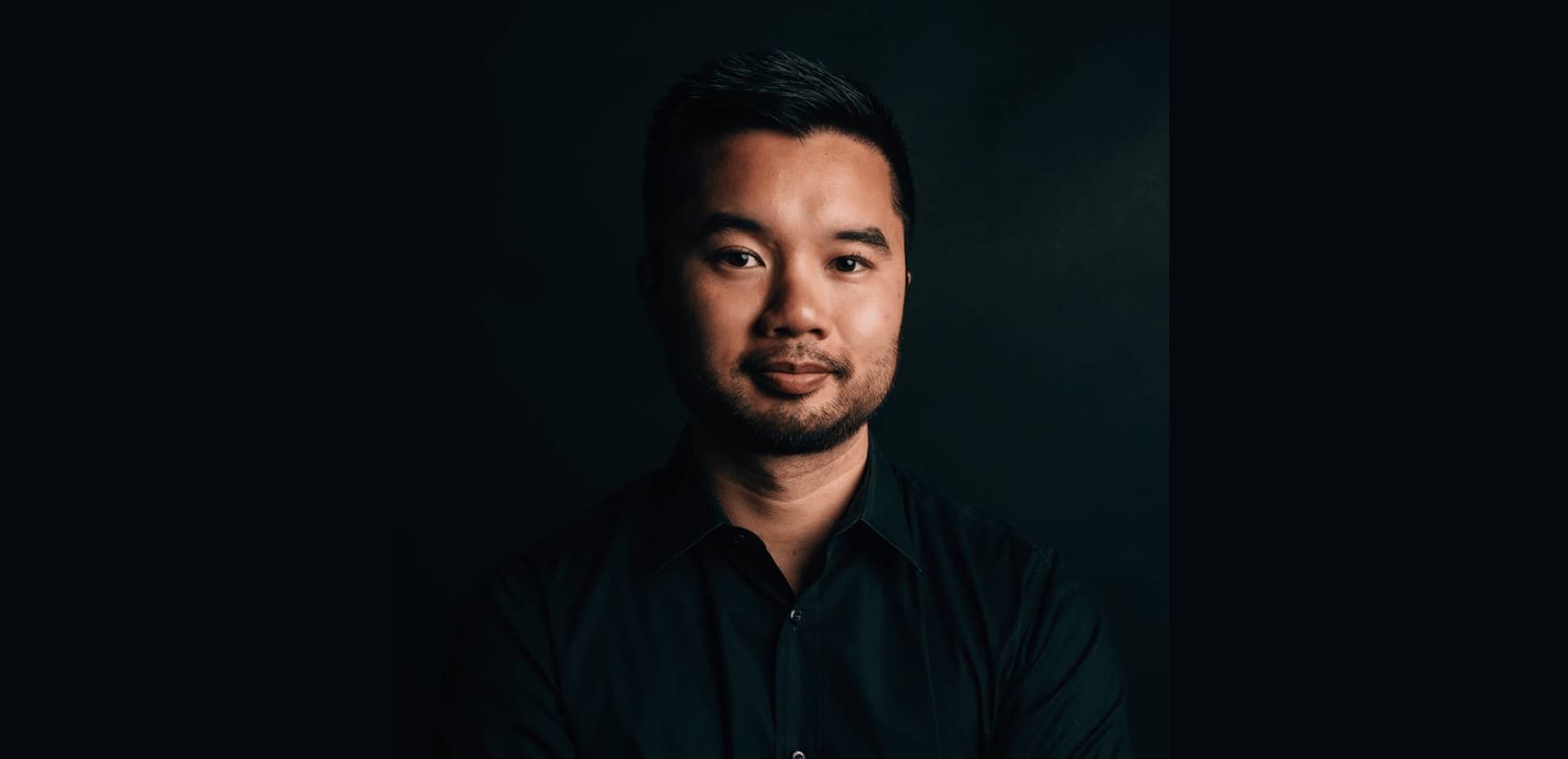
This week's Founder Friday features a founder betting that Austin's next big social sport won't be pickleball. It'll be padel.
Thanh Pham is an AI consultant who goes into companies and trains employees, teams, and executives on how to think about AI and put it to work. Alongside two co-founders, he's also building Padel Society, one of Austin's first indoor padel clubs, set to open this September.
Padel sits somewhere between tennis, racquetball, and pickleball. It's played two-on-two on an enclosed glass court, making it social and strategic, easier to learn than traditional tennis, but more technical than pickleball.
Thanh believes Austin is one of the best markets in the country for it. The city already loves fitness, community, social sports, sober daytime events, and anything that makes traditional networking more engaging.
What founders can steal from Thanh's story:
- Look for markets hiding inside your own frustrations
- Pay attention when demand already exists, but the infrastructure doesn't
- Build for a community you already understand
Here's what Thanh shared about the lowest-hanging AI wins for business owners, why Austin is a natural padel hotbed, and what it takes to bring a new sport indoors...
What do you do, and how did you end up building two very different businesses?
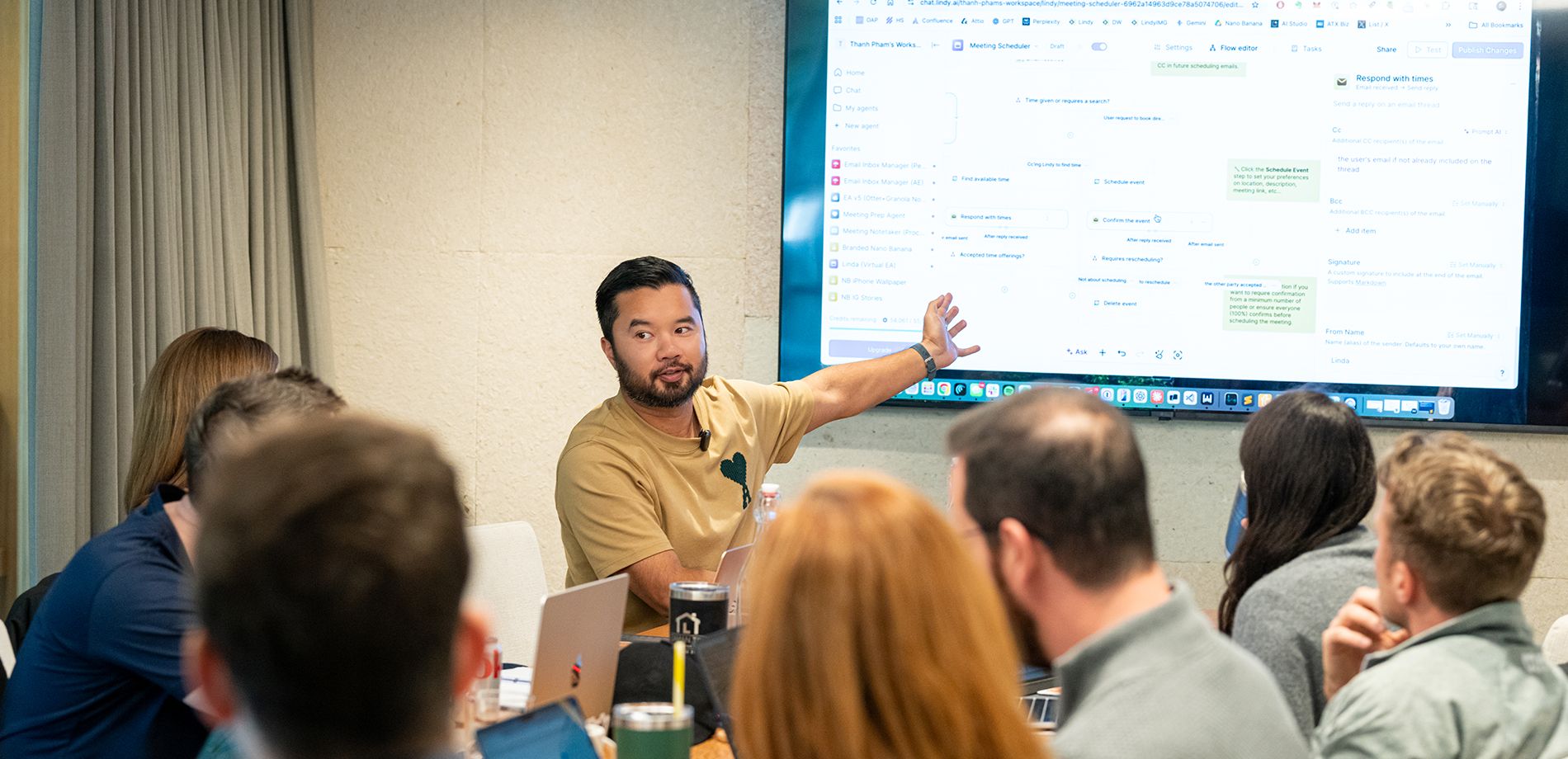
Yes, I'm heavily involved in two businesses right now. One is AI consulting: I go into companies and train employees, team members, and executives on how to think about AI and implement AI agents in their workforce. On the completely other side of the spectrum, I have an indoor racket club called Padel Society, where we're building an indoor sports facility to play padel.
My background is in executive coaching. I've had an executive training business for over 15 years, teaching people how to use different apps and tools to be more productive. When ChatGPT came out in late 2022, I thought, "Maybe this is another app that will help them." It turned out to be way more than that. I ended up spinning up a separate entity to focus just on AI.
What should business owners in Austin know about how the AI space is changing right now?
A lot of founders and business owners hear about AI, but they're confused. "How do I get ROI on this? What is it? What can it do for me? What are the use cases?" I come in to educate them on how to use it, how to make it cost effective, and how to deploy it to create efficiencies and solve their biggest pain points, usually around sales, marketing, ops, and customer service. Businesses are genuinely curious. They just don't know how to get started.
I speak across the country, and sometimes I forget how tech forward Austin is. When you leave the city, you realize not everyone knows what ChatGPT or Claude is. Every day I get one or two text messages from people saying, "Thanh, I've heard about you. Can you come in? We need AI help." And I'm seeing more and more consultants coming in to help local businesses. People here are waking up to how AI can help them grow. It's more prevalent than most other cities.
What are the lowest-hanging fruits for getting ROI from AI?
The easiest place to start is a digital chief of staff: an executive assistant that manages your calendar and email inbox. That alone can save you 10 to 15 hours a week for a fraction of what a person would cost.
Competitor research is another. Companies spend hours every week researching competitors and market trends. Claude and ChatGPT can do most of that in 10 or 15 minutes, and a lot of it can be automated.
The bigger the business, the more likely their information lives in a bunch of different places: a POS, a CRM, email, a drive online. Finding something on the spot is a real bottleneck. I trained an accounting department where reconciling transactions used to take four or five hours. With one simple workflow, it now takes four minutes.
For sales teams especially, there's a lot you can do. I was helping a business where the owner reviewed all sales calls every day, spending an hour to an hour and a half giving feedback. We automated it: we took his core values and playbook, and now AI goes through the call transcripts and gives feedback to every salesperson as soon as the call ends, instead of waiting until the end of the day.
Beyond time and cost savings, where else does AI create value?
Cost savings is a big one. How many businesses pay thousands or hundreds of thousands of dollars for software tools they use maybe 10% of the features of? Those can now be replaced cost effectively.
The other side is value and revenue creation. AI can speed up development on things you'd never otherwise have time for, whether that's new apps, tools, or content. Agentic video editing is a thing now. Instead of editing something in four or five hours, it can potentially be done in one. You produce more video, more content, and that usually generates more leads and exposure.
Most businesses come in thinking about cost savings, especially in this economy. Once they get past that and start seeing use cases, they get really interested in how to create revenue and leads.
What tools do you actually recommend?
I'm a big fan of Claude and ChatGPT. They do pretty much the same thing, and their desktop and phone apps are very good. That's the first place I'd start for most people.
My second tip is to use your voice instead of typing. Wispr Flow is an app I like that lets you dictate everything. Instead of typing an email, I just say what I want to say and it drafts it for me. An easy, quick win everyone can apply. On the phone, every AI app now has a voice mode, which lets you iterate much quicker.
For someone who hasn't touched AI yet, how do they get their feet wet?
Spend 10 or 15 minutes a day doing the tasks you'd normally do, but have the tool do them instead of you. That's how you learn fastest and see what's possible.
The other thing is what I call blank page syndrome. You open ChatGPT or Claude, stare at a blank screen, and think, "What do I do now?" The best way to break that is to see how other people use it. YouTube is the most valuable resource I've found. When you watch someone in another industry use AI, you realize, "I do this manually. I didn't know I could automate it too." Learning about use cases is the best way to discover what AI can do. Then it's about having the curiosity to go in and play.
Two channels I'd recommend from friends: Claire Vo's How I AI, where she interviews people about how they use AI in their daily lives, and Rick Mulready, who's really good at taking complex things and making them simple and practical.
How do you actually keep up with AI as fast as it's moving?
Honestly, it's very difficult. People joke that you have to be unemployed to keep up with AI, and I think that's true. I'm full time on it and I still have a hard time keeping up. This is another place AI itself can help, giving you a synthesis and update every day.
What is padel, and why should people in Austin care?
Padel is a sport played two on two. It's a mixture of tennis, racquetball, and pickleball. It uses a ball similar to tennis, but you play inside a glass cage, which gives it the racquetball feel. The court is smaller and you play doubles, which gives it the social pickleball feel. It's the best of all three combined.
It's the fastest growing sport in the world right now. In the US, pickleball is number one, but padel is right up there, and it's still very new here. Most people haven't seen or heard of it. Austin is actually the second biggest market in the country after Miami. It's taking off here, and I think it's going to take off everywhere.
How did Padel Society come about?
Padel came to Austin about two and a half years ago, and that's when I first started playing. I used to play a lot of pickleball and switched over. As someone who plays a lot, especially in the Texas heat, you realize outdoor play is brutal in summer. You're avoiding the sport unless it's early morning or late evening.
I thought, "Why are there no indoor courts?" So two co-founders and I started this project, scratching our own itch. As I got into it, I realized there's a reason nobody has done indoor yet: it's hard. One of the biggest shots in padel is the lob, and in pickleball you don't lob as much. So you need very high ceilings. Finding a space that works is the first challenge. Second, you have to convince a landlord to let you turn their warehouse into a sports facility, and they've never heard of the sport. It reminds me of where pickleball was 10 years ago.
Padel Society opens in September 2026. You can go to padelsociety.ai and sign up. We're throwing a big opening party and inviting the padel community and lots of people who don't play. We'll have celebrity tournaments and a big F1 week in October. As someone with a background in throwing events around Austin, I'm really excited to introduce the city to indoor padel.
What makes Austin such a natural hotbed for a sport like this?
Austin people love being active. Health and wellness matter here. Last year I was one of the first to start the sober daytime partying movement. I ran an event series called Latte where people showed up Sunday morning at 10:00 a.m. and partied until 2:00 p.m. Instead of going out at 10 at night, you'd start at 10 in the morning. It grew to 2,500 people at one point.
Austin has always had a health and wellness, sober activity streak. And I'm noticing more and more that date nights here are sports or activities instead of a bar or restaurant. It started with pickleball, and now it's moving to padel. Austin has this knack for, "Let's do something fun, different, active, and healthy." Padel checks every box.
There's also research showing that people who play racket sports live nine or 10 years longer, because you're exercising your body and your brain. Padel especially, because you play off the walls like racquetball, has real strategy and thinking to it. Pickleball is a little more one dimensional once you're at the kitchen. In padel, you can turn left, turn right, do a 360, play off the walls. There are probably 30 more shots you can hit than in pickleball. It scratches a mental itch for people who like strategic games.
Any advice for people trying padel for the first time?
If you don't like it the first time, don't give up. Even though I'm addicted now, I didn't like it the first time I played, because I was bad at it and got frustrated. My friends dragged me back, and by the third time I fell in love. Give it three tries before deciding.
How can the Austin community help?
Thanh wants to connect with Austin founders, business owners, operators, and teams who are trying to understand how AI can create measurable value inside their companies.
He also wants to connect with Austin's growing community of padel players, fitness enthusiasts, event organizers, and people looking for a more active and social way to meet others.
Where can people learn more?
Learn more about Padel Society, connect with Thanh on LinkedIn, follow him on Instagram at @humanrouter, and visit humanrouter.net for his AI consulting work.
Want more founder stories?
Subscribe to get weekly interviews and Austin startup news.