Picture this: A multi-billion dollar idea scribbled on the back of a bar napkin.
No, I'm not talking about J.K. Rowling and the Harry Potter franchise. I'm talking about Patrick Bowen and Andrew Traverso, two Duke classmates who while grabbing beers, sketched out what might become NVIDIA's next serious competitor: Neurophos.
They're attacking the AI energy bottleneck from a totally different angle:
Optical computing, photonic chips.
Instead of relying solely on electrical currents, this approach uses light to move data which is especially advantageous for the intensive matrix operations that dominate AI. This technology can potentially cut the energy and latency required to scale models drastically.
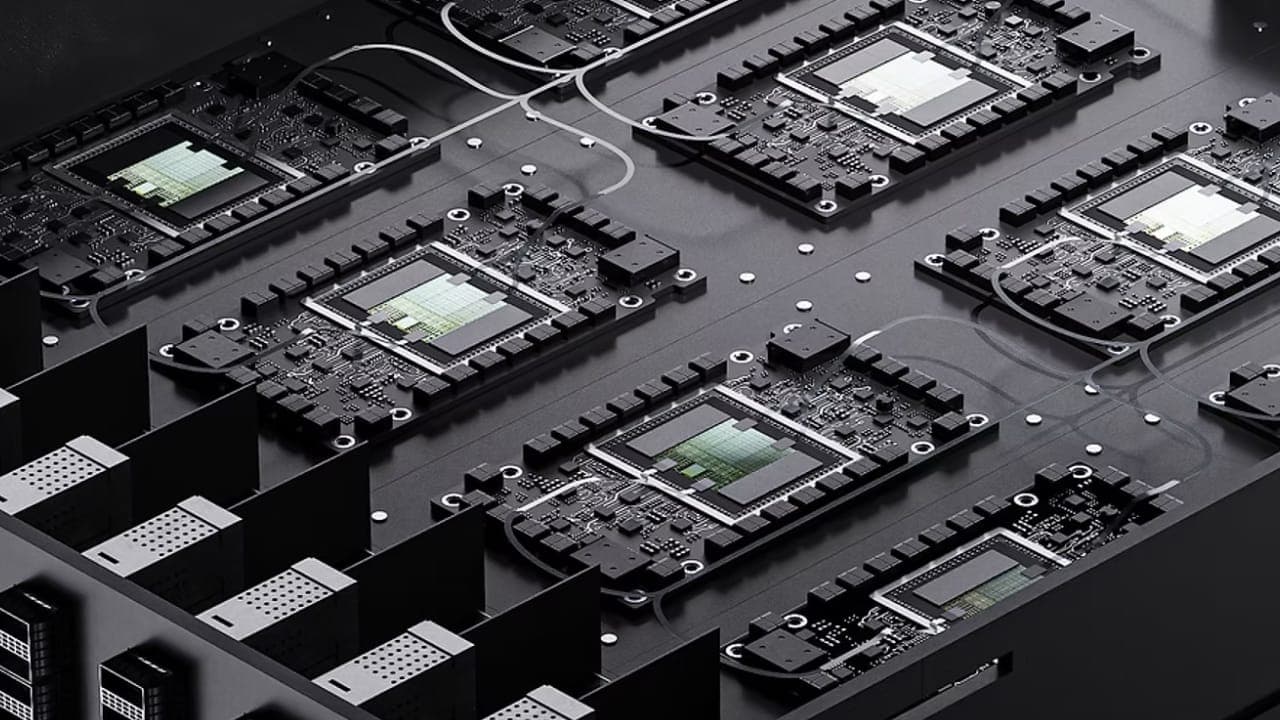
Their bet: an OPU (Optical Processing Unit) that can deliver order-of-magnitude gains up to "100x" lower hardware cost, by compressing today's GPU-rack-level output into something closer to the power draw of a single GPU.
Recently, Neurophos raised $110M in series A funding to go build this future, right here in Austin. Putting Neurophos' total evaluation well over billion dollar unicorn territory.
Austin continues to prove that it can fund, house, and supply the talent for companies ambitious enough to take a swing at industry giants like NVIDIA.
Read the complete newsletter issue this story appeared in.
Get Austin business stories weekly
Subscribe to Austin Founders Feed for local business news, founder interviews, and the events shaping the city.