SpaceX is going public June 12th, and it could become the largest IPO in history. The company is reportedly offering 555.6 million shares at $135 each, a roughly $75 billion raise that would value it near $1.77 trillion.
That would make Elon Musk's rocket company one of the most valuable companies in the U.S., with a public-market value above Tesla's current market cap. That is the Wall Street headline.
For Austin founders, the most useful signal is not the listing. It is what a $1.77 trillion rocket-and-satellite company says about where the next decade of startups gets built.
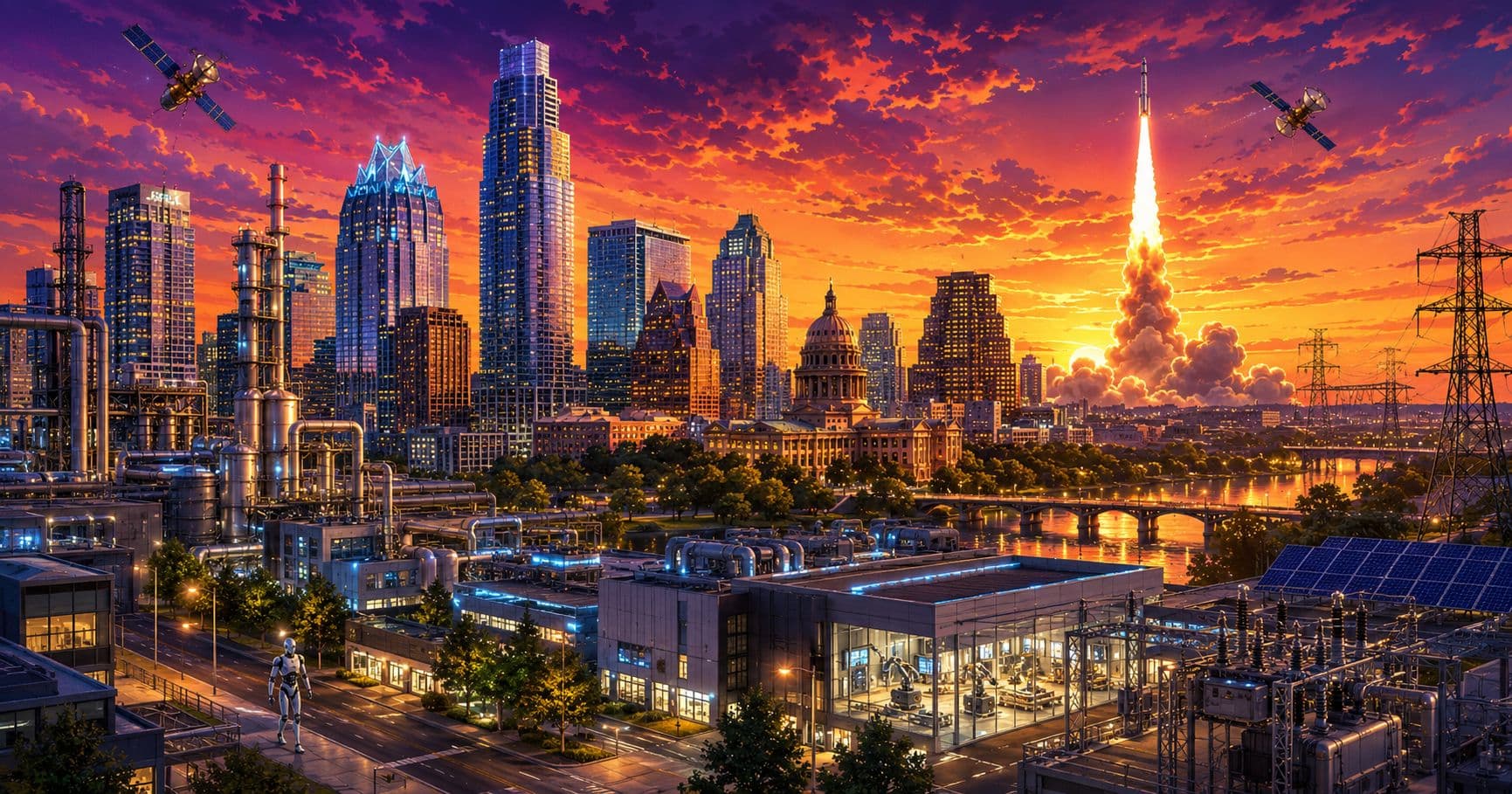
For the last ten years, the default startup story has been software: apps, SaaS, marketplaces, dashboards. The next cycle looks more physical: rockets, satellites, chips, power, AI data centers, defense, manufacturing, advanced communications. SpaceX sits at the center of that shift.
It is one of the world's largest satellite-internet operators, a defense and communications contractor, and now part of the AI infrastructure conversation, including cloud-computing deals, massive compute ambitions, and the possibility of data centers in space.
The Austin version of that shift is already visible. Apptronik is building industrial humanoid robots from Austin after raising more than $900 million across recent rounds. CesiumAstro is building space and defense communications technology. Firefly Aerospace landed a spacecraft on the Moon and brought another Texas space company into the public-market conversation. On the defense side, Saronic is building autonomous naval vessels at a reported $4 billion valuation. The hard-tech pipeline is structural.
Army Futures Command sits downtown. UT is nearby. Capital Factory has become a major node for defense innovation, giving startups more direct exposure to military, dual-use, and procurement networks than most tech cities can offer.
Texas as a whole is becoming a serious home for the physical infrastructure behind AI, space, defense, and advanced manufacturing. But physical startups burn more cash, move slower, and punish the move-fast-and-iterate instincts that built the last cycle. SpaceX itself is reportedly still unprofitable, with major losses on the way to this valuation. That is the tension.
The founders who can work the seam between software intelligence and physical systems may have some of the best ground in the country to build from right here in Austin.
The real question for the next few years is not whether Austin can compete in hard tech. The companies, capital, talent, and defense pipeline are already here. The question is whether you are building for the cycle that is ending, or the one that is just starting.
Read the complete newsletter issue this story appeared in.
Related stories
Get Austin business stories weekly
Subscribe to Austin Founders Feed for local business news, founder interviews, and the events shaping the city.