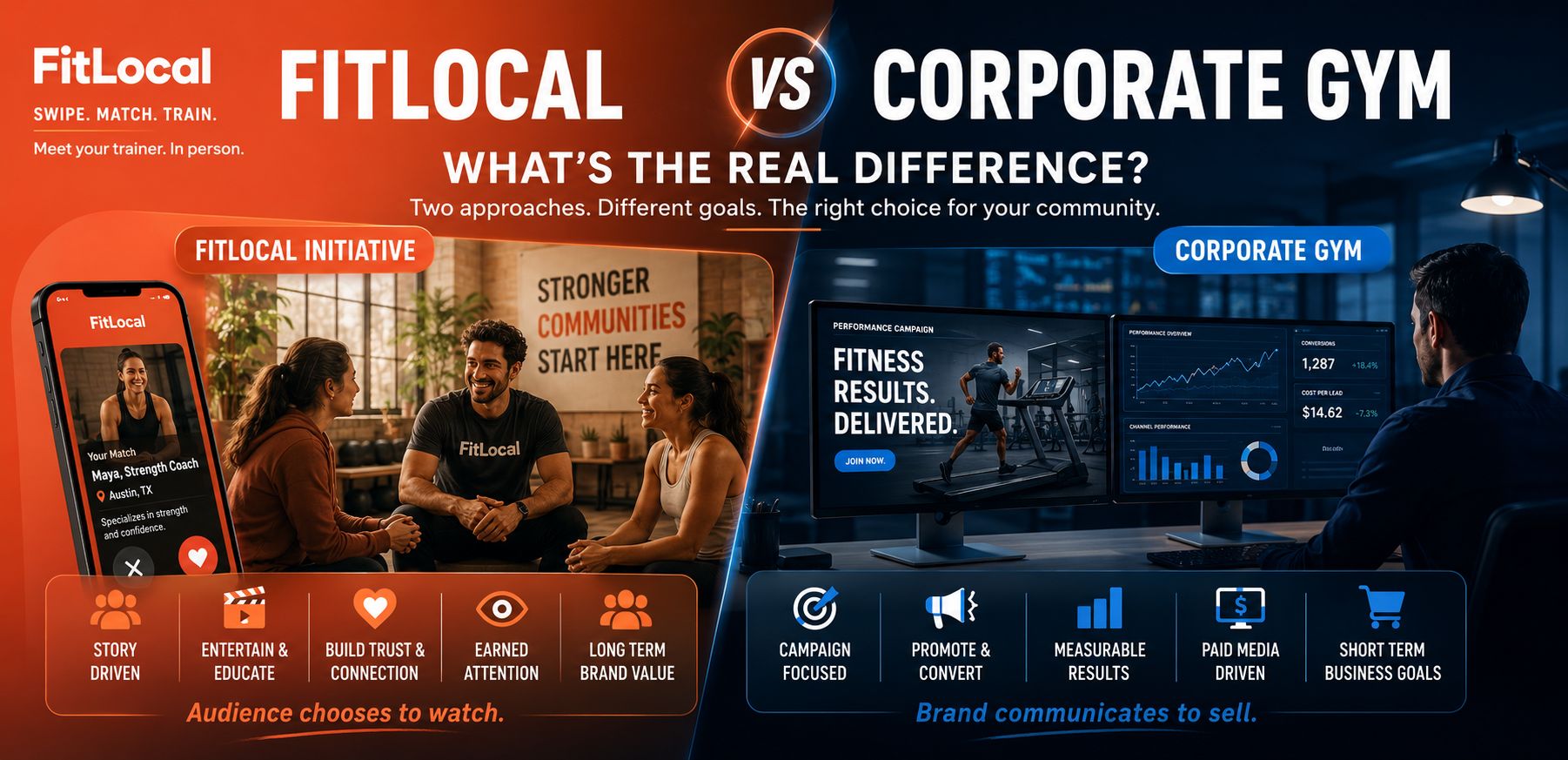
Every brand today is fighting for the same thing, and it isn't a sale. It's attention, and the fight has gotten so crowded that the old playbook is starting to fail even for the companies that wrote it.
Branding vs. Marketing: Two Different Games
According to Kantar, brand-building and demand-generation activity have always been distinct disciplines: branding plays the long game, building an unchanging identity and an emotional relationship with the consumer, while marketing solves the short-term problem of moving product now. The two are meant to work together. What's changed is that most companies, especially in crowded categories like fitness, have been running almost exclusively on the second one, and it's starting to show diminishing returns.
The Brands That Own Their Story
The brands that have endured decades of noise did the opposite. Nike didn't build one of the world's most valuable brands by leading with a coupon. It built it by telling a story about willpower and self-belief long before it ever asked for the sale, turning the swoosh into a symbol people already trusted before a single product spec entered the conversation. Red Bull built an entire media organization, producing films and live events, before most people could name a single ingredient in the can. Gucci makes cinema.
As one recent analysis of the shift put it, "narrative control creates economic control." Brands that treat culture as something they rent through campaigns stay dependent on ad spend forever. Brands that own their own story build something that compounds instead of depreciating the moment the media buy ends.
Story First, Business Second
That's the distinction I think most companies get backward: they treat story as a nice-to-have layered on top of the business, when it should be the foundation the business is built on. A company's story has to come first: why it exists, who it's fighting for, what it believes. The business value, the funnel, the conversion machinery, comes second, even though both ultimately need to run at the same time for marketing to actually work. A brand that shows up only to ask for attention, without ever having earned it, is renting. And a renter never outlasts an owner. The brand that people genuinely want to watch will always outlive the brand that's merely fighting to be watched.
How Fit Local is Applying This
My prediction is that this gap only widens. It's a philosophy we've built Fit Local around from day one, and it's part of why we structured our own launch the way we did.
Fit Local, the Austin-based platform connecting personal trainers with clients, officially launched across the city this month and closed its first seed funding round, but we've been just as focused on how we tell that story as on the app itself.
Rather than lead with conversion-focused ads the way most fitness marketers do, we built our strategy around mission, community, and entertainment first. That's the thinking behind Fit Local TV, a new local video series launching in the coming weeks that will spotlight Austin-area gyms and let them show off their coaching, culture, and community in a way a banner ad never could. "Ads get you a click. Story gets you a customer for life," is a line I keep coming back to. "We'd rather be interesting than interruptive."
The Foundation, Not the Finish
None of this means performance marketing goes away. Funnels, offers, and conversion still matter, and we're building ours in parallel, not instead of. But in a market this loud, story is no longer the soft part of the strategy. It's the foundation everything else has to stand on.
Learn more about Fit Local, and follow updates on Fit Local TV, at Fit Local.
By Conley Miller — Founder, FitLocal
Learn more at fit-local.com
Want more expert columns like this?
Subscribe to get a new partnered expert column delivered every week.