happyhopper
How Austin's happyhopper Hit the iOS Top 100 with TikTok

This week's Founder Friday is about turning a common local frustration into a product people actually use.
happyhopper helps people instantly find nearby happy hours, food and drink specials, and local events, without relying on outdated Google searches or buried social posts. And it's already hit the Top 100 Food & Drink apps on iOS.
Why should founders care?
Because this story is about more than nightlife. It's about spotting a frustrating everyday problem, using hyper-local content to drive growth, and learning that your biggest advantage is often trust and accuracy, not reach.
Here's what they shared...
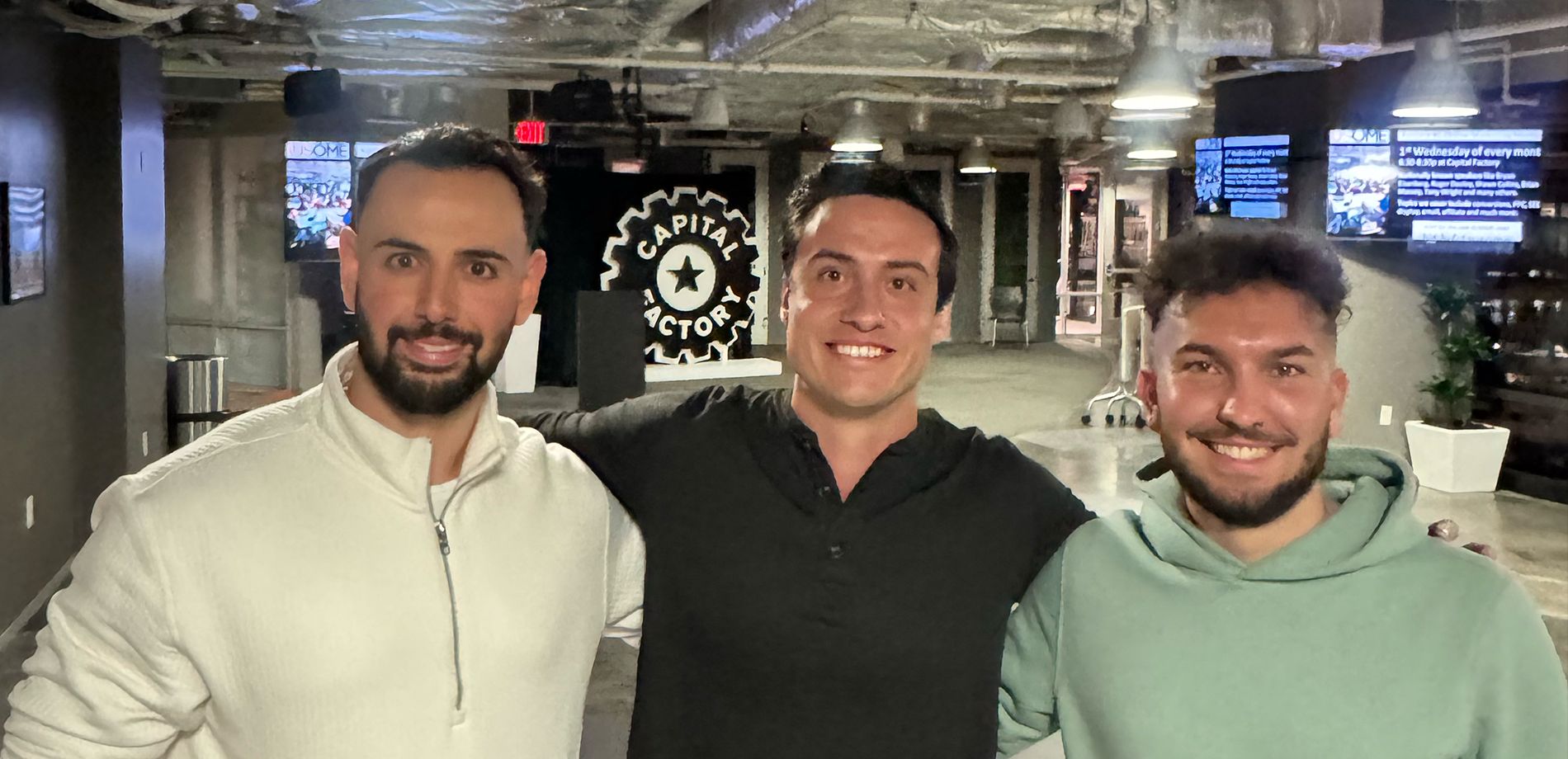
What are you building and who is it for?
We're building happyhopper, a consumer app that helps people instantly find nearby happy hours, food & drink specials, and local events across North America.
It's for people who don't want to scroll through outdated Google or Yelp listings, they just want to know where to go right now. It's also for restaurants and bars that need a better way to promote time-sensitive deals and events without getting buried in social media feeds.
Why Austin?
Austin is one of the best nightlife and going-out cities in the country, plus it gets a constant flow of tourism, which makes it perfect for a product built around discovering where to go in real time.
The business scene here has also been huge for us, people are actually willing to help and make introductions when you're early.
What problem or moment made this idea impossible for you to ignore?
We kept running into the same problem over and over, even back in college, trying to figure out where to go and realizing everything online was outdated or wrong.
You'd show up for a happy hour that didn't exist, or miss a great event because it wasn't posted anywhere.
At some point, it stopped feeling like a small annoyance and started feeling like a massive gap that nobody had solved properly.
What was the first sign that your business was actually working?
Hitting the Top 100 Food & Drink apps on iOS was a huge milestone for us, especially because we did it without running paid ads.
But the moment it actually felt real was when we started running into users "in the wild" who told us they use or love the app before we even mentioned that we were the founders.
That was the first sign this wasn't just something we were building, people were actually relying on it.
What is the biggest challenge you're currently dealing with?
Balancing rapid user growth with building the infrastructure needed to keep data accurate at scale.
We're focused on making accuracy our biggest competitive advantage.
It's easy to grow fast with content, but much harder to maintain trust if the information isn't consistently reliable.
What Austin-specific resource, person, or community actually helped you the most?
The community around Capital Factory has been huge for us.
From events to mentorship to just being around other founders building things, it's helped accelerate our learning curve and opened doors we wouldn't have had otherwise, especially as first time business founders.
What is your unfair advantage right now?
We're not trying to be everything, just the best at solving this one specific problem.
We've built a system that combines scraping, structured data, and user input to create a real-time layer of time-sensitive offers.
Most platforms rely on static data. We're focused on dynamic, constantly updating information, which is much harder to build and maintain.
What has been the biggest growth lever for you?
Short-form video, especially TikTok.
It's allowed us to reach large audiences quickly by showcasing real deals in different cities, which translates directly into downloads.
What is one thing you're doing right now that is working better than expected?
Leaning into hyper-local content in Austin.
When we focus on very specific neighborhoods, events, or nights out, engagement and conversion are significantly higher than broader, generic content.
What advice do you have for Austin businesses looking to grow?
Don't try to market to Austin as a whole, it's too broad. The traffic on I-35 doesn't help. Focus on specific neighborhoods or communities and dominate those areas first.
Also, take advantage of how collaborative the city is. Partnerships and word of mouth go a long way here if you actually show up and support people.
Where can people learn more about you?
Try happyhopper here.
Want more founder stories?
Subscribe to get weekly interviews and Austin startup news.