Austin Startup's Prosthetic-Arm Implant Reaches First Human Patients
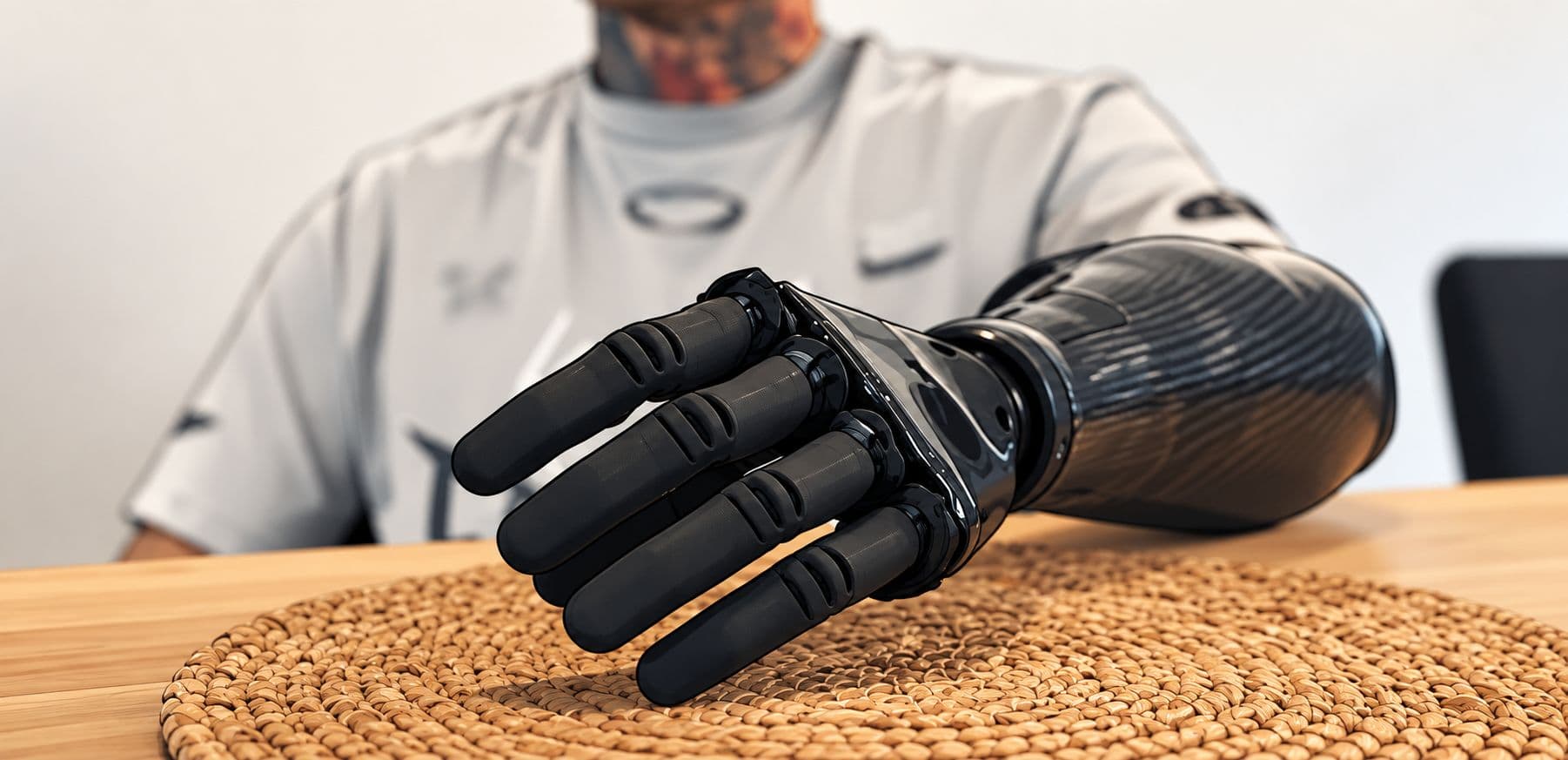
Picture losing your hand but still being able to control a robotic replacement just by trying to move your missing fingers. An Austin startup is working to make that possible.
Phantom Neuro announced its first successful human implant procedures, marking a major milestone for its technology designed to help people with limb loss control robotic prosthetics more naturally.
The company is developing Phantom X, a device implanted beneath the skin that detects muscle signals and translates them into commands for a robotic limb. And unlike some brain-computer interfaces, it doesn't require brain surgery.
How does it work?
Even after losing a hand, people can still generate muscle signals when they attempt to move their missing fingers or wrist.
Phantom X is designed to capture those signals and translate them into movements of a compatible robotic prosthetic. The system uses a flexible sensor placed beneath the skin of the remaining arm, where it can detect electrical activity from the muscles.
Why implant it?
Traditional prosthetic-control systems often rely on sensors placed on the skin's surface. Sweat, movement, and changes in positioning can interfere with those signals. Phantom Neuro believes its under-the-skin approach could provide more reliable and intuitive control.
The first human patients
The first two participants received their implants at Cabrini Health in Melbourne, Australia, as part of an ongoing clinical study.
The procedures:
Took roughly one hour each
Were performed without general anesthesia
Involved placing the sensor beneath the skin, rather than inside the brain
The first participant, 32-year-old carpenter Michael Easy, reported that his arm healed quickly following the procedure, although he experienced some initial soreness and swelling.
Phantom Neuro is now evaluating the implant's safety, reliability, and ability to improve prosthetic control. The technology remains investigational and is not yet approved for commercial use.
What's next for Phantom Neuro?
Founded in 2020 by physician and CEO Connor Glass, Phantom Neuro is building technology at the intersection of robotics, healthcare, and human-machine interfaces.
The startup raised a $19 million Series A in 2025, led by global prosthetics manufacturer Ottobock, bringing its total funding at the time to approximately $28 million. It also received FDA Breakthrough Device designation in 2025, although additional clinical trials and regulatory review are required before commercialization.
The company's ambitions extend beyond prosthetic arms, with potential future applications in exoskeletons and other robotic systems.
The next milestone will be seeing how well Phantom X performs across more patients and whether it can eventually make advanced prosthetics easier to use in everyday life.
Read the complete newsletter issue this story appeared in.
Related stories
Get Austin business stories weekly
Subscribe to Austin Founders Feed for local business news, founder interviews, and the events shaping the city.